Showing posts with label history. Show all posts

Tuesday, February 03, 2015

When Hitler Stole Pink Rabbit: Ramona and I Continue Reading About WWII


Ramona and I are still reading about World War II. The other day we finished When Hitler Stole Pink RabbitShe loved it, and I do, too (as did my older girls.) It's a lovely, moving, and sometimes funny book that explores one family's experience. (There are just two incidents that would be disturbing for sensitive children -- if you are doing this book as a read-aloud, you should see them coming and so can handle them accordingly.)

The story is based on the life of the author, Judith Kerr, whose family, thanks to her father's foresight, fled Germany in 1933 when she was ten years old. They subsequently lived in Switzerland, France and England, where Judith Kerr still resides. (She's 91! I must tell Ramona! We must write to her and tell her how much we love the book!)

The protagonist, ten year old Anna, is a writer, like her father:
Lately she had been producing a number of illustrated poems which had been much admired both at home and at school. There had been one about a fire, one about an earthquake and one about a man who died in dreadful agonies after being cursed by a tramp. Why not try her hand at a shipwreck? All sorts of words rhymed with sea and there was "save" to rhyme with "wave" and she could use the three new blue crayons for the illustration. She found some paper and began.
Soon she was so absorbed that she did not notice the early winter dusk creeping into the room ....

Anna's father is a wise man and a marvelous mentor. Ramona and I loved this sage writerly advice:
Anna said, "Papa, do you really like the poem?" 
Papa said he did.
"You don't think it should be more cheerful?"
"Well," said Papa, "a shipwreck is not really a thing you can be very cheerful about." 
"My teacher Fraulein Schmidt thinks I should write about more cheerful subjects like the spring and the flowers."
"And do you want to write about the spring and the flowers?"
"No," said Anna sadly. "Right now all I seem to be able to do is disasters."
Papa gave a little sideways smile and said perhaps she was in tune with the times.
"Do you think then," asked Anna anxiously, "that disasters are all right to write about?" 
Papa became serious at once."Of course!" he said. "If you want to write about disasters, that's what you must do. It's no use trying to write what other people want. The only way to write anything good is to try to please yourself."
We liked Anna and her entire family immensely. I enjoyed her mother's trials as she learned to cook and sew, and we were amused by Anna's (initially) underachieving older brother, Max, who met the word count on his school essays by padding them with long lists of the foods his characters ate. In every essay the feasting ended with, "And then they all burst."

We identified with many things that reminded us of our homeschooling life. For example, I love the following passage about studying history. Anna's father has just asked her what she learned about Napoleon, and she's rattled off an impressive list of dates and events:

"What an extraordinary way to learn about Napoleon," said Papa. "Is that all you know?" 
"But it's everything!" said Anna, rather hurt, especially as she had not made a single mistake. 
Papa laughed. "No, it's not everything," he said, and settling down on her bed he began to talk about Napoleon. He told the children about Napoleon's childhood in Corsica with his many brothers and sisters, about his brilliance at school and how he became an officer at fifteen and commander of the entire French army at the age of twenty-six; how he made his brothers and sisters kings and queens of the countries he conquered but could never impress his mother, an Italian peasant woman. "C'est bien pourvu que ca dure," she would say disapprovingly at the news of every new triumph, which meant, "It's good as long as it lasts." Then he told them how her forebodings came true, how half the French army was destroyed in the disastrous campaign against Russia, and finally of Napoleon's lonely death on the tiny island of St. Helena. 
Anna and Max listened entranced. 
"It's just like a film," said Max.

Later, Anna's parents consider sending the children to live with their grandmother while they search for housing and work in England. Anna panics, fearful that the family will split up.

"It's just that I think we should stay together," she said. "I don't really mind where or how. I don't mind things being difficult, like not having any money, and I didn't mind about that silly concierge this morning -- just as long as we're all four together." 
"But Anna," said Mama, "lots of children leave their parents for a while. Lots of English children go to boarding schools." 
"I know," said Anna, "but it's different if you haven't got a home. If you haven't got a home, you've got to be with your people." She looked at her parents' stricken faces and burst out, "I know! I know we have no choice and I'm only making it more difficult. But I've never minded being a refugee before. In fact, I've loved it. I think the last two years, when we've been refugees, have been much better than if we'd stayed in Germany. But if you send us away now I'm so terribly frightened ... I'm so terribly frightened ...." 
"Of what?" asked Papa. 
"That I might really feel like one!" said Anna and burst into tears.

As someone who felt like a nomad much of her life (I grew up in an Air Force family, and Atticus and I have moved a number of times) I loved this illustration of how very little where we live can mean to us, and how much -- everything, really! -- family means as a way of defining whether or not we are "home."

A highly recommended book.

Thursday, November 06, 2014

Bits and Pieces of Our Days

Whither has October fled?  It's gone missing and I'm left wondering if one of my favorite months met all her obligations before she took off for a year's sabbatical.

At least one obligation was clearly fulfilled -- October brought us, as it has for twenty-one marvel-filled years now, the birthday of Anne-with-an-e.

I'd never before bought a daughter a margarita for her birthday, but I can no longer make that claim. And she likes my favorite red wine, too. Yes, I am a good homeschooler indeed. I know how to teach all the important stuff.

~~~~~

Ramona and I are still on World War II. So far we've read The Winged Watchman by Hilda van Stockum, Lois Lowry's Number the StarsThe Little Riders by Margaretha Shemin, and Ian Serraillier's Escape from Warsaw (which I wish still bore its original title, The Silver Sword.)

We read Snow Treasure, which I usually include it in the WWII bundle of books, last year because it was a book club pick. I'll leave it up to her whether or not she wants to reread it this year.

I also have a stack of picture books -- we've read Always Remember Me: How One Family Survived World War II, and in the next week will pick up The Bracelet, So Far from the Sea, and
The Yellow Star: The Legend of King Christian X of Denmark

Lots of good geography stuff happening as we read these books, too.

~~~~~


What am I reading these days? The epic and wonderful Kristin Lavransdatter. Granted, I am only one book into the trilogy (I almost typed "three-book trilogy" ... more coffee, anyone?) but I have already dubbed it Wonderful and More.


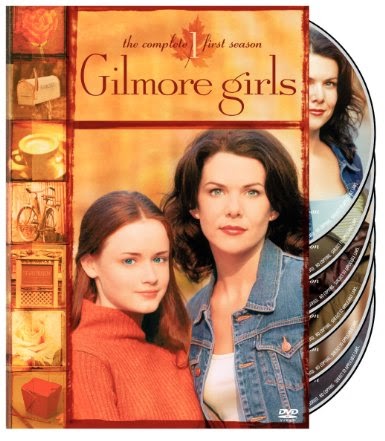
What am I watching on the laptop these days, while I work out? Gilmore Girls. It is wonderful in a different way, and strangely connected to Kristin.

Wednesday, September 17, 2014

It's the New Bumpoofle-Dee-Dee


I'm reading Hilda van Stockum's The Winged Watchman to Ramona as part of our World War II studies this year. Tonight, we were reading at the kitchen table while Anne and Betsy were doing the dinner dishes. At this point in the story, we're learning more about Hildebrand, a young man, a philosophy student, who is secretly staying with the Verhagen family. Anne and Betsy were listening in.

I had just read a paragraph in which Mr. Verhagen and Hildebrand are having a conversation, and as the two men are agreeing on a point, we learn that
At first he (Father) had thought that such a bookish person could not learn anything so practical (as helping with the windmill), but Hildebrand proved to be quite dexterous and Father was beginning to rely on him.
"Oh," I said, "he's bookish and handy. I wonder if he cooks, too?"

"Hildebrand might be the perfect man!" Betsy said, but I wasn't really listening. I had already moved on to read the next line:
"I know," Father sighed. 
The girls burst out laughing at my/Father's response and when I realized how it sounded I laughed, too.

"And thus," I said, "the grown-up girls' version of Bumpoofle-Dee-Dee is born!"

What's Bumpoofle-Dee-Dee? One of our most enduring family jokes.

It came up when I read The Winged Watchman to Anne and Betsy eight years ago. Here's the post from October, 2006:
~~~~~

While reading The Winged Watchman aloud the other day, Ramona suddenly stopped me and said, "What's a bumpoofle-dee-dee?"

I said, "A what? Where did you hear that, honey?"

"You! You just read it a minute ago."

"I did?"

"Yes. You said Bumpoofle-dee-dee."

Thoroughly confused, I skimmed back over what I'd just read and found this phrase: Some people think electricity is foolproof and easy.

"Oh! Honey, no -- " I corrected, "I said, foolproof and easy. Not bumpoofle-dee-dee."

Anne and Betsy were besides themselves with giggles.

But, oh, it got worse at dinner time. The girls were recounting the misunderstanding to Atticus. Anne said, "Daddy, can I tell you about Bumpoofle-dee-dee?"

"Huh?" said Atticus, understandably foggy after a day of teaching high schoolers. "One poopy baby?"

If I thought the girls had a good giggle at breakfast, it was nothing compared to this laughfest. Anne spit applesauce across the table onto Betsy, and Ramona latched onto the phrase, which she could repeat endlessly, sending her sisters into fits and guffaws.

When everyone finally quieted down, I told the origin of the story to Atticus, but it seemed to have lost its punch. We do, however, have a new family word.

Perhaps we need to add elocution to our curriculum?

~~~~~

And this is Reason #4,987,236 that I love read-alouds!

Thursday, August 21, 2014

World War II With Ramona

Ramona and I have been talking about what we want to read and study this year, and one thing we've settled on is World War II. Anne-with-an-e was twelve and Betsy was about ten when we first studied World War II. Now that Ramona is twelve (gulp), I think it's a great time to dive in to the time period with her, too.

We'll start with all the great historical fiction I read to Anne and Betsy:

* Novels:

Twenty and Ten
Number the Stars 
The Borrowed House
When Hitler Stole Pink Rabbit (and a second post on that book)
The Winged Watchman
Snow Treasure
Escape from Warsaw
The Little Riders
My Friend the Enemy

* Picture Books:

Boxes for Katje
Always Remember Me
The Orphans of Normandy
Home of the Brave 
So Far From the Sea
The Bracelet
Baseball Saved Us
The Greatest Skating Race
The Yellow Star
One Thousand Tracings

* Here's a link to a post that addresses "How We Handle World War II."

It includes some more book ideas, such as Welcome to Molly's WorldTomie de Paola's I'm Still ScaredThe Young Life of Pope John Paul II and Anne Frank: The Diary of a Young Girl.

That's just the beginning. I need to comb my archives for more books and ideas.

Looks like we have a full year ahead of us.

Wednesday, February 22, 2012

"Do Not Put On a Gloomy Face" -- Or, Bits and Pieces of Our Days

It's Ash Wednesday!

Mayhaps Ash Wednesday does not, in your view, call for an exclamation point. Especially if you are giving up coffee. Which I'm not doing this year. So my exclamation points remain.

One of the antiphons in today's Morning Prayer is, "When you fast, do not put on a gloomy face, like the hypocrites." So, you'll find no gloom here on this Ash Wednesday.

And -- also not gloomy, and something Ramona still loves to do during Lent -- the Lamb of God calendar? I just snapped a new picture of our latest one and added it back to "A Meaningful Lent: The Monstrously Long Post." (Blogger sometimes eats up my photos and leaves ugly, blocky exclamation points in their place. It had done so with my old Lamb of God picture. Why do you do that, Blogger? It's not the kind of exclamation point that I wish to have remaining on my blog.)

The Lamb of God calendar this year (color and bell by Ramona):


~~~~~~~~~~

On with the recent bits and pieces:


Last week we went to Mass at a neighboring parish. As we left they handed out baby bottles (which contained instructions to fill them with change) as part of a collection effort to help women in crisis pregnancies. We took one. A couple of days later, Anne-with-an-e told me that before we return the bottle to the church I should take out the message that Ramona had rolled up and inserted:

"Help! We've been on this island for three days with no snuff." *

(Can you tell we've been reading Pippi Longstocking?)

And also? If I'd listened to the announcements after Mass instead of reading them later in the bulletin, I would have realized that the baby bottle project was for the junior high kids of the parish. No wonder that kid looked at me so funny when I took one of the bottles.

~~~~~~~~~~

Ramona and I continue to have fun with Ancient Egypt projects. An idea I first got from History Links is an archaeological dig into Jell-O:

The remains of ancient civilizations appear to include little green army men. 

Our Jell-O layers of terra not-so-firma 

Ramona's sugar cube version of a pyramid: 


~~~~~~~~~~

Anne-with-an-e read the Van Morrison post yesterday.

"Van Morrison is dead, isn't he?"

"I hope not," I said. "He's advertising his latest tour on his website."

"Oh. I guess if he were, that would make him the Rocking Dead."

~~~~~~~~~~

Betsy bought something that she calls a hoodie and I call her new Obi-Wan inspired clothing.  ("Obi-Wan" is a more flattering description than, "That thing makes me think of the Emperor! Ewww!") But it does look incredibly cute on her. 

~~~~~~~~~~~~~~~

* As I was typing this up, I was informed by my daughters that Ramona never actually got around to getting the note into the bottle. She claims she never had plans to do so. The whole story strikes me as Pippi-ish. 

Friday, October 28, 2011

Poetry Friday: Ancient Egypt in Verse with Ramona


A recent library find: The Tomb of the Boy King: A True Story in Verse by John Frank. I haven't read it with Ramona yet, but I really enjoyed this poetic version of the discovery of King Tut's tomb. The illustrations are lovely, and the book is full of heiroglyphics for Ramona to try to decipher. The epilogue plays up "the curse" quite a bit, but that will afford us a great chance to discuss such things. It will be fun, too, to see where this little rabbit trail takes us.


Visit Random Noodling today for a great Robert Frost poem and the rest of the Friday round-up.

Thursday, September 29, 2011

Homeschooling Notes: Ancient Egypt With Ramona

Ramona and I have been reading about ancient Egypt. This week, thanks to the Book of Artrageous Art Projects, we mummified Barbie. Here she is getting ready for her ceremonial wrapping, with some of her most treasured possessions (lovingly selected by Ramona) surrounding her: 


And here she is, properly wrapped (we skipped the cleaning, oiling, salting and 70 days of drying), surrounded by lip gloss, two cakes (one chocolate, one vanilla), butter, an egg, coins (bus fare, Ramona says), her driver's license, a hairbrush, a ponytail holder and a can of Coke: 


Princess Shopsalot (name thanks to the Klutz book) 
now rests in materialistic peace in her Ramona-decorated sarcophagus: 


~~~~~~~~~~

The next photo has nothing to do with ancient Egypt, but is simply to show you that when Ramona decides to stage a Pet Beauty Pageant, Sydney not only wins, but is also named both Miss Congeniality and Miss Most-Patient-Dog-Evah. 


Thursday, February 04, 2010

Bits and Pieces of Our Days

 
While she was sick, Betsy decided to learn how to fold paper cranes. She was originally shooting for a thousand (editor's note: Sadako influence) but hasn't made it yet. Ramona is in the picture above, helping with the inital count. 


*****

Last night, Betsy and Ramona called Anne-with-an-e into the room to look at something. Anne replied, "It had better be good -- I'm right in the middle of reading about heart malformations." 

This girl is seriously looking forward to upcoming dissections for her biology studies. 

*****

Ramona loves panda bears. Ramona loves crafts. Ramona loves plans.  (Hmmm ... schooliness and crafts ... this is the offspring of the Unschooly, Not-So-Crafty Mom?) Ramona requested a Panda craft, and proceeded to describe her idea: a collage-inspired thing wherein we would cut out black shapes and glue them onto white paper, thus creating her dream panda. Here's the result: 


I'm grateful she comes up with the ideas because my idea of a panda craft would be: "Honey, go cut pictures of pandas out of your Ranger Rick magazine." 
(I did, actually, refer to an old issue of Ranger Rick to do this craft -- we found a panda craft, and I used it as a model for this little guy.) 

Speaking of Ranger Rick, I love both it and Your Big Backyard for loads of Ramona's science. Throw in Kids Discover and National Geographic Kids (thanks, Grandma and Grandpa!) and you've got science, history, social studies and current events, all while cuddling up on the couch with your daughter and a snack. 

*****

Last week for Poetry Friday, I featured a book by Celeste Davidson Mannis, a counting book, packed full of haiku and beautiful illustrations. Unbeknownst to me, another book that I picked up during the same library visit is also by the same author (but a different illustrator -- funny that they both caught my eye.) The second book is The Queen's Progress, ostensibly an alphabet book, but also full of historical facts. I haven't had time to read through it all, but it looks quite lovely.

*****

My time is up for now -- Pancakes for lunch today! The griddle awaits.

Tuesday, March 24, 2009

Family History, Family Time

The girls and I are doing a 4-H/History/Geography project, and we're looking into our family tree. My father has already made this very easy for us by doing, well, basically all the legwork.

He started it a few years ago, and traced my maternal grandmother's side of the family back to Resolved White, who came over on the Mayflower. Such interesting things to discover! I knew my mother's family went way back in New England, but putting these pieces together is as fun for me as it is for the girls.

I always think of a lot of Irish heritage on my maternal grandfather's side, because he was born in Ireland, but his father was actually from Scotland and it was from there that my grandfather sailed to America in 1911, when he was two years old. Our ancestors on my mother's side are all from Scotland and England -- no Irish that I can see, other than the fact that my grandfather's parents lived there when he was born.

And, on my father's side, it's pretty much German all the way.

It's fascinating stuff, and tucked in with some of the family tree notes were some other things from one of my grandmothers, letters I wrote her when I was in Kindergarten, and eight, nine and ten years old. My girls were delighted to read them, and to compare my handwriting and letter-writing skills to theirs.

Together we read a pack of letters I sent to my grandfather when I was thirty years old. He was suffering macular degeneration by then and was nearly blind. He was still able to read, though, with the help of a special computer/viewer and typed letters were the easiest for him to read. (By inserting the paper in the viewer, the text was magnified on a screen, making it readable for him.) So, one year, not knowing what else to give him for Christmas, I put together a year's worth of letters, one for each month. They were just silly little bits ... thoughts and poems and interesting factoids that I thought would amuse him.

The gift was such a hit that I put together a pack of them for Grandpa for the next year, too. As the girls and I started to read through that stack tonight, we got to the autumn of that year and realized that the last few letters were never opened. That would have been when my grandfather was sick, I suppose. Sometime later, he died. My grandmother apparently never opened those letters.

So, we opened them tonight, my girls and I, and we read through them. Silly little bits. Things I'd forgotten, things meant for my grandfather's eyes that he never saw. And I smiled at my grandmother holding on to them, not opening "mail" that wasn't hers.

My daughters looked concerned when they saw me tear up. They worry about things that make me cry. They needn't worry, though. My tears were tears of gratitude. I was extraordinarily blessed to have four beautiful, caring, loving grandparents, well into my adulthood. Not everyone has that. Yes, I miss them, but I was blessed.

History.

Family.

Time.

It all continues, and it's the best kind of project.

Thursday, January 22, 2009

Book review: Grain of Wheat


Fr. Michael Giesler
kindly sent me a review copy of his latest novel, Grain of Wheat, from Scepter Publishing. It's the first of his books that I've read, but is actually the third in a trilogy that began with Junia and continued with Marcus. All are related, and tell the story of the early Church, of conversions, of joy and crosses.


From the publisher's synopsis:

Set in the second century of the early Christian Church, Grain of Wheat takes you into the heroic lives of the early Christians. Along the way, it shows the beauty and dignity of the Christian family, along with the power of the vocation to celibacy — a charism lived not only by priests and bishops, but by many of the lay faithful. These brave men and women, both single and married, followed Christ and spread his Kingdom while remaining in society. Through their courageous faith an entire culture was transformed, one person at a time, one family at a time.

This work of fiction draws on early Christian testimonies, as well as more recent historical and contemporary books. It continues the saga which the author introduced in Junia (2002) and Marcus (2004).


Grain of Wheat
offered me the chance to immerse myself for a time in the faraway world of the early Christian Church but at the same time to see that, in some ways, their lives were not so different from our own. Friendships, family relationships, work -- all are affected by our faith, and our faith should affect all of these things. Acquaintances can become friends in Christ, and conversions can come from the most unlikely corners.

I also appreciated the way in which Grain of Wheat was written -- so gently, with the careful touch of a man who treasures what is sacred and knows how (when the plot requires) to refer to the profaning of it without wallowing in the details and ugliness.

I will have no qualms about passing this one on to teenage Anne-with-an-e, and I have a feeling we'll both want to go back and read Junia and Marcus, to fill in the blanks and spend more time with this heroic but very human Christian family.

Monday, October 27, 2008

"Every name ... is a lightning stroke to some heart"

"Every name ... is a lightning stroke to some heart, and breaks like thunder over some home, and falls a long black shadow upon some hearthstone." -- from a Gettysburg newspaper, a few days after the battle

See this link for the quote, in context, in George Will: Gettysburg as it deserves to be remembered.

(h/t: Atticus)

Wednesday, October 01, 2008

Sun Slower, Sun Faster

We all really enjoyed this book!

First published in 1955, Sun Slower, Sun Faster is a fun book about time travel, but it's also packed with the living history that we love.

Alicia, at Love2Learn, wrote a great, comprehensive review of it a few years ago, so I'll just send you there for further details on plot and characters. As Alicia noted, details of the Catholic faith and even of the Mass are beautifully explained and interwoven with the suspense and history, as the young protagonists learn what the Catholic Church is all about.

And so, Sun Slower, Sun Faster is not just an adventure of time travel and fascinating events of the past -- it's the adventure of conversion.

Wednesday, July 23, 2008

Memoria Press and Instincts

Do you get this catalog?

Memoria Press's catalog, The Classical Teacher, always has great articles, making me feel that this is yet another magazine subscription that I should cancel in my ongoing effort to trim the budget. Then I remember that it's a free catalog, not a pricey magazine, and I settle in with a cup of coffee and some compelling reading.

The latest issue has a wonderful article by Cheryl Lowe entitled, "History is Not Chronological."

I nodded my head in agreement throughout, especially at the portions in which she recommends covering American History and Bible stories for first graders (as opposed to covering history in chronological order from the earliest grades on.) She discussed exactly what I was already planning to do with Ramona next year, which is to use whole, living books (Little House is calling our names) and Bible stories, and do plenty of fun activities such as making butter, and corncob dolls and doing other related crafts.

I've always thought that we need not study all the periods of history in chronological order, but rather that, for the early years in particular, we should study what's relevant to us, what makes sense when you're six, and what will stick. That's the way I started when Anne-with-an-e was in first grade -- it was the year of All Things Little House, Many Things American Girl, and The Beginning of the Timeline. And, for our history studies, this auspicious beginning has served us well. We seem to have raised kids who love history, as evidenced today in Gettysburg, Pennsylvania. As we toured the tremendous museum here, the girls snapped pictures and moved from one fascinating exhibit to another. They stood in stark contrast to the surly boy who, when his father pointed out an amazing artifact with the exclamation, "Imagine! They've preserved that!" responded with, "So?"

I felt so bad for that poor dad.

Now, Ramona, on the other hand, was pretty bored at the Gettysburg Museum. She's just not old enough yet. And that's why, in the fall, we'll be diving into All Things Little House.

It just makes sense. Thanks, Memoria, for the affirmation. I often feel that my individual, anecdotal "evidence" of how well something works just isn't enough. It's so nice, sometimes, to see in print the respected opinions of others that demonstrate that my instincts and anecdotal evidence are more universal than I think they are.

Tuesday, April 22, 2008

Wrapping up the Middle Ages ...

... even though I really don't want to leave. There's just so much great, fun stuff for this time period.

Our last few books:


Anne-with-an-e is reading Joan of Arc by Mark Twain. I haven't read this one myself, but have heard that it's excellent. It'll be in my summer reading pile.


Betsy is reading a biography of St. Elizabeth of Hungary, St. Elizabeth's Three Crowns. This is one of the Vision series. We have several of these and have enjoyed them all.


On a different note,
Ms. Frizzle's Adventures: Medieval Castle is typical Frizzle fun. The girls and I have always loved all things Magic School Bus, and this book is no exception.


Good Masters! Sweet Ladies! Voices from a Medieval Village by Laura Amy Schlitz was a delightful find. I plucked it from the library shelf and immediately had that feeling that I'd found a treasure. Original poetry and prose are used to tell the stories of all kinds of folk, from "simpletons to saints." (Note: some imagery is too violent for younger or very sensitive children, and be prepared to explain several historical events related to faith.)


There are a few more, but I'm out of time for this morning!

Monday, April 21, 2008

The Pope and the Bard

Though we could keep learning about the Middle Ages for years and years, we took a little break recently to spend some time with Pope Benedict XVI, and to read a little bit of Shakespeare, capitalizing on recent curiosity and interest from Betsy.

We took brief looks at A Midsummer Night's Dream, As You Like It, and King Lear, using one of my favorite first-introductions, E. Nesbit's Beautiful Stories from Shakespeare.
This book offers short but satisfying summaries, in story form, of Shakespeare's plays. It's a non-intimidating way to introduce children to the Bard, and to help them see, very quickly, that his comedies are full of fun stuff. You can hook them right away on the outrageous situations and mistaken identities and give them a good grasp of plots. It's a great way to lay the groundwork for later and deeper enjoyment.

Another terrific intro book is Charles and Mary Lamb's Tales from Shakespeare, which offers the same type of summarized story but with a bit more detail and length.

I'll be back soon to talk about how we plan to wrap up our year in the Middle Ages.

Monday, April 07, 2008

Sort of a review: If All the Swords in England

If All the Swords in England is a beautiful book about St. Thomas Becket. I called this post a "sort of a review" because I'm actually going to cheat and send you to Alicia's terrific review at Love2Learn. It can be found here, and summarizes the book and characters wonderfully. And, I see that Alicia and I even left out the same line when reading this book aloud (Ramona was in the room, so I skipped a couple of other details as well.)

This book (dubbed "Sif all the Words in England" by Ramona, thanks to the cover design) held Anne-with-an-e and Betsy captive all the way through, their interest never waning. They were nearly as moved as I was when St. Thomas was killed (though I think I'm the only one who actually wept.) Seeing the action from the young twins' point of view was particularly moving, and left an imprint on my girls that a straight narration of the facts would not have accomplished.

Quick detours had us looking up more information about King Henry II, discussing the responsibilities of the Church vs. the state, and looking (very) briefly into Eliot's Murder in the Cathedral.

I love, love, love this way of studying history with my children. It comes alive and stays with them in amazing ways.

If you're looking for some historical literature but don't know where to start, try visiting the Reading Your Way Through History page for ideas. It's never steered us wrong!

Monday, March 31, 2008

Detours ... but not really

We've been on some detours lately. Although, when I consider it, "detour" isn't really the right word. A detour implies that we've veered off the main road, whereas I really think of these detours as intriguing parts of the whole journey.

First up: Greek mythology in fiction.

A few years ago, when we first approached some ancient history, we read the opening chapters of the D'Aulaire's Book of Greek Myths. Perhaps I shouldn't have read over lunch (as is often our habit) because the girls said the story of Cronos made them sick. They wanted nothing to do with those disgusting creatures, so I decided that the timing wasn't right.

Last year, a friend recommended the Percy Jackson books by Rick Riordan. The premise: 21st century children find out that they are actually demi-gods (one mortal parent, one who's a Greek god or goddess. Hijinks ensue.) Both my friend and her children were enjoying the books immensely, and she thought we might, too.

We finally got The Lightning Thief from the library, and the girls loved it. They went on to devour Sea of Monsters and The Titan's Curse, and they are eagerly awaiting the fourth book in the series. What's been fun to see is the way the girls have gotten interested in Greek mythology now. They want to know more so that they get all the allusions and can guess at plot twists. Anne-with-an-e has scoured our shelves looking for anything she can find on the subject (but, alas, I gave away that D'Aulaire back after so many scowls.)

This isn't an in-depth review (I've only read the first in the series, so I can't give a full review) but more of a reaction and an observation. The books are fun, and contain some clever humor, plenty of action and a couple of surprises (and plenty of "Ewwww!" moments, too.) I found myself wanting to rewrite bits here and there, though. Percy's mother, in particular, makes a choice that I found really unpalatable and even out of character. But, I talked with the girls about all that, and that, I think is the beauty of either previewing books, or reading along with your children (though it's not possible these days for me to read everything along with them. But, we still share a lot.)

The discussion that results from sharing books is invaluable.

If I had to record it for the homeschooling records, I could call it "Intro to Greek mythology" and "Plot and character analysis" and "Morality 101: Is revenge ever justified?"

And, all of the above is why this kind of reading isn't really ever a "detour" but is part of the whole, delightful journey of homeschooling and life.

Next up:

Ramona's detour into the ocean with sea turtles.

Wednesday, March 19, 2008

The Grail Code

Here's the problem with homeschooling:

I keep taking time away from school to learn things.

We're wandering through the Middle Ages this year, and I just finished reading The Grail Code, by Mike Aquilina and Christopher Bailey.

Last night I stayed up too late to finish wandering around their Grail Code website, which is full of fascinating stuff, such as these links on their Scriptorium page to the texts that are discussed and quoted in the book.

Did you know you can read the old French original of Chretien de Troyes' Lancelot, or, The Knight of the Cart, if you so choose? (Alas, if only I were able to so choose. The only French I remember from high school is "Ou est la salle de bain?" A vital phrase, oui, but limited. But I digress.)

The Scriptorium page alone is worth a look, even if you skip the book. But, don't skip the book -- I learned volumes about the Grail, its origins and its chroniclers.

Their website whet my appetite for more Grail art (don't you dare skip that click -- it's only two pieces of art, and they're worth your clicking efforts) and they'll even tell you How to Pronounce Those Impossible Welsh Names.

I admit that my Grail-Lancelot-Arthur knowledge is fairly limited. I have a passing-to-average acquaintance with Camelot (enough to know that I don't picture Lancelot as Robert Goulet.) I knew about Malory, of course, and we have a few books that I rounded up for the kids this year. I first read T.H. White's The Once and Future King when I was in high school, and loved it dearly.

What The Grail Code offered me, on top of fascinating lore and legend, was an historical look at the rise and fall of the story and the world's enduring fascination with it. The authors' quest takes us through the Grail's sacred beginnings, into periods of secular, cultish appeal, traces why and how those changes happened, and finally, routes us back to what the Grail really means:

What (or Who) is our quest really about? What makes us thirst so, and how is that thirst quenched?

When Anne-with-an-e asked me what I was reading, I gave her a short teaser version, and she said, "Wow ... searching for the cup ... that would make a great story!"

Ahem. Clearly, I've not covered Arthur with her in any depth. And she's never seen the Indiana Jones movie, either.

I might just hand her The Grail Code and let her know that her quest is about to begin.

Tuesday, November 27, 2007

That's why we homeschool

The other day, as the girls and I reviewed some of the things we've read about so far in our Middle Ages study, I stopped in the middle of my globe-pointing and said, "Well, of course, this isn't the only stuff that was happening during that time. Basically, we're covering a very tiny portion of what happened in European history. It would take years and years and years to learn everything there is to know about the Middle Ages."

Betsy, with gusto, replied, "Then let's take years and years and years to learn everything!"