Showing posts with label WWII. Show all posts

Monday, March 23, 2015

Bits and Pieces of Our Days: The Recent-Books-With-Ramona Edition


Ramona and I finished our read-aloud of Anne of Avonlea. We read it only over breakfast on the days when Anne and Betsy could join us, so it took awhile, but it was worth it to once again share a book about "that Anne girl" with all of my girls.  Such fun, and made for a delightful start to our day.

***


Also recently finished a read-aloud of The Castle in the Attic by Elizabeth Winthrop. 
Fun, adventure, and interesting ethical issues to discuss. 

***


Read-aloud in progress: The Cottage at Bantry Bay. It's Hilda van Stockum ... need I say more?

***


Twenty and Ten,  by Claire Huchet Bishop. The last, I think, of the WWII books for this year.

***

And, one that we can't wait to get our hands on 
(we'll be watching for the UPS man tomorrow!): 


The new Penderwicks! Cue the squees! We're all giddy! 

Tuesday, February 03, 2015

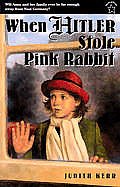
When Hitler Stole Pink Rabbit: Ramona and I Continue Reading About WWII


Ramona and I are still reading about World War II. The other day we finished When Hitler Stole Pink RabbitShe loved it, and I do, too (as did my older girls.) It's a lovely, moving, and sometimes funny book that explores one family's experience. (There are just two incidents that would be disturbing for sensitive children -- if you are doing this book as a read-aloud, you should see them coming and so can handle them accordingly.)

The story is based on the life of the author, Judith Kerr, whose family, thanks to her father's foresight, fled Germany in 1933 when she was ten years old. They subsequently lived in Switzerland, France and England, where Judith Kerr still resides. (She's 91! I must tell Ramona! We must write to her and tell her how much we love the book!)

The protagonist, ten year old Anna, is a writer, like her father:
Lately she had been producing a number of illustrated poems which had been much admired both at home and at school. There had been one about a fire, one about an earthquake and one about a man who died in dreadful agonies after being cursed by a tramp. Why not try her hand at a shipwreck? All sorts of words rhymed with sea and there was "save" to rhyme with "wave" and she could use the three new blue crayons for the illustration. She found some paper and began.
Soon she was so absorbed that she did not notice the early winter dusk creeping into the room ....

Anna's father is a wise man and a marvelous mentor. Ramona and I loved this sage writerly advice:
Anna said, "Papa, do you really like the poem?" 
Papa said he did.
"You don't think it should be more cheerful?"
"Well," said Papa, "a shipwreck is not really a thing you can be very cheerful about." 
"My teacher Fraulein Schmidt thinks I should write about more cheerful subjects like the spring and the flowers."
"And do you want to write about the spring and the flowers?"
"No," said Anna sadly. "Right now all I seem to be able to do is disasters."
Papa gave a little sideways smile and said perhaps she was in tune with the times.
"Do you think then," asked Anna anxiously, "that disasters are all right to write about?" 
Papa became serious at once."Of course!" he said. "If you want to write about disasters, that's what you must do. It's no use trying to write what other people want. The only way to write anything good is to try to please yourself."
We liked Anna and her entire family immensely. I enjoyed her mother's trials as she learned to cook and sew, and we were amused by Anna's (initially) underachieving older brother, Max, who met the word count on his school essays by padding them with long lists of the foods his characters ate. In every essay the feasting ended with, "And then they all burst."

We identified with many things that reminded us of our homeschooling life. For example, I love the following passage about studying history. Anna's father has just asked her what she learned about Napoleon, and she's rattled off an impressive list of dates and events:

"What an extraordinary way to learn about Napoleon," said Papa. "Is that all you know?" 
"But it's everything!" said Anna, rather hurt, especially as she had not made a single mistake. 
Papa laughed. "No, it's not everything," he said, and settling down on her bed he began to talk about Napoleon. He told the children about Napoleon's childhood in Corsica with his many brothers and sisters, about his brilliance at school and how he became an officer at fifteen and commander of the entire French army at the age of twenty-six; how he made his brothers and sisters kings and queens of the countries he conquered but could never impress his mother, an Italian peasant woman. "C'est bien pourvu que ca dure," she would say disapprovingly at the news of every new triumph, which meant, "It's good as long as it lasts." Then he told them how her forebodings came true, how half the French army was destroyed in the disastrous campaign against Russia, and finally of Napoleon's lonely death on the tiny island of St. Helena. 
Anna and Max listened entranced. 
"It's just like a film," said Max.

Later, Anna's parents consider sending the children to live with their grandmother while they search for housing and work in England. Anna panics, fearful that the family will split up.

"It's just that I think we should stay together," she said. "I don't really mind where or how. I don't mind things being difficult, like not having any money, and I didn't mind about that silly concierge this morning -- just as long as we're all four together." 
"But Anna," said Mama, "lots of children leave their parents for a while. Lots of English children go to boarding schools." 
"I know," said Anna, "but it's different if you haven't got a home. If you haven't got a home, you've got to be with your people." She looked at her parents' stricken faces and burst out, "I know! I know we have no choice and I'm only making it more difficult. But I've never minded being a refugee before. In fact, I've loved it. I think the last two years, when we've been refugees, have been much better than if we'd stayed in Germany. But if you send us away now I'm so terribly frightened ... I'm so terribly frightened ...." 
"Of what?" asked Papa. 
"That I might really feel like one!" said Anna and burst into tears.

As someone who felt like a nomad much of her life (I grew up in an Air Force family, and Atticus and I have moved a number of times) I loved this illustration of how very little where we live can mean to us, and how much -- everything, really! -- family means as a way of defining whether or not we are "home."

A highly recommended book.

Thursday, November 06, 2014

Bits and Pieces of Our Days

Whither has October fled?  It's gone missing and I'm left wondering if one of my favorite months met all her obligations before she took off for a year's sabbatical.

At least one obligation was clearly fulfilled -- October brought us, as it has for twenty-one marvel-filled years now, the birthday of Anne-with-an-e.

I'd never before bought a daughter a margarita for her birthday, but I can no longer make that claim. And she likes my favorite red wine, too. Yes, I am a good homeschooler indeed. I know how to teach all the important stuff.

~~~~~

Ramona and I are still on World War II. So far we've read The Winged Watchman by Hilda van Stockum, Lois Lowry's Number the StarsThe Little Riders by Margaretha Shemin, and Ian Serraillier's Escape from Warsaw (which I wish still bore its original title, The Silver Sword.)

We read Snow Treasure, which I usually include it in the WWII bundle of books, last year because it was a book club pick. I'll leave it up to her whether or not she wants to reread it this year.

I also have a stack of picture books -- we've read Always Remember Me: How One Family Survived World War II, and in the next week will pick up The Bracelet, So Far from the Sea, and
The Yellow Star: The Legend of King Christian X of Denmark

Lots of good geography stuff happening as we read these books, too.

~~~~~


What am I reading these days? The epic and wonderful Kristin Lavransdatter. Granted, I am only one book into the trilogy (I almost typed "three-book trilogy" ... more coffee, anyone?) but I have already dubbed it Wonderful and More.


What am I watching on the laptop these days, while I work out? Gilmore Girls. It is wonderful in a different way, and strangely connected to Kristin.

Wednesday, September 17, 2014

It's the New Bumpoofle-Dee-Dee


I'm reading Hilda van Stockum's The Winged Watchman to Ramona as part of our World War II studies this year. Tonight, we were reading at the kitchen table while Anne and Betsy were doing the dinner dishes. At this point in the story, we're learning more about Hildebrand, a young man, a philosophy student, who is secretly staying with the Verhagen family. Anne and Betsy were listening in.

I had just read a paragraph in which Mr. Verhagen and Hildebrand are having a conversation, and as the two men are agreeing on a point, we learn that
At first he (Father) had thought that such a bookish person could not learn anything so practical (as helping with the windmill), but Hildebrand proved to be quite dexterous and Father was beginning to rely on him.
"Oh," I said, "he's bookish and handy. I wonder if he cooks, too?"

"Hildebrand might be the perfect man!" Betsy said, but I wasn't really listening. I had already moved on to read the next line:
"I know," Father sighed. 
The girls burst out laughing at my/Father's response and when I realized how it sounded I laughed, too.

"And thus," I said, "the grown-up girls' version of Bumpoofle-Dee-Dee is born!"

What's Bumpoofle-Dee-Dee? One of our most enduring family jokes.

It came up when I read The Winged Watchman to Anne and Betsy eight years ago. Here's the post from October, 2006:
~~~~~

While reading The Winged Watchman aloud the other day, Ramona suddenly stopped me and said, "What's a bumpoofle-dee-dee?"

I said, "A what? Where did you hear that, honey?"

"You! You just read it a minute ago."

"I did?"

"Yes. You said Bumpoofle-dee-dee."

Thoroughly confused, I skimmed back over what I'd just read and found this phrase: Some people think electricity is foolproof and easy.

"Oh! Honey, no -- " I corrected, "I said, foolproof and easy. Not bumpoofle-dee-dee."

Anne and Betsy were besides themselves with giggles.

But, oh, it got worse at dinner time. The girls were recounting the misunderstanding to Atticus. Anne said, "Daddy, can I tell you about Bumpoofle-dee-dee?"

"Huh?" said Atticus, understandably foggy after a day of teaching high schoolers. "One poopy baby?"

If I thought the girls had a good giggle at breakfast, it was nothing compared to this laughfest. Anne spit applesauce across the table onto Betsy, and Ramona latched onto the phrase, which she could repeat endlessly, sending her sisters into fits and guffaws.

When everyone finally quieted down, I told the origin of the story to Atticus, but it seemed to have lost its punch. We do, however, have a new family word.

Perhaps we need to add elocution to our curriculum?

~~~~~

And this is Reason #4,987,236 that I love read-alouds!

Thursday, August 21, 2014

World War II With Ramona

Ramona and I have been talking about what we want to read and study this year, and one thing we've settled on is World War II. Anne-with-an-e was twelve and Betsy was about ten when we first studied World War II. Now that Ramona is twelve (gulp), I think it's a great time to dive in to the time period with her, too.

We'll start with all the great historical fiction I read to Anne and Betsy:

* Novels:

Twenty and Ten
Number the Stars 
The Borrowed House
When Hitler Stole Pink Rabbit (and a second post on that book)
The Winged Watchman
Snow Treasure
Escape from Warsaw
The Little Riders
My Friend the Enemy

* Picture Books:

Boxes for Katje
Always Remember Me
The Orphans of Normandy
Home of the Brave 
So Far From the Sea
The Bracelet
Baseball Saved Us
The Greatest Skating Race
The Yellow Star
One Thousand Tracings

* Here's a link to a post that addresses "How We Handle World War II."

It includes some more book ideas, such as Welcome to Molly's WorldTomie de Paola's I'm Still ScaredThe Young Life of Pope John Paul II and Anne Frank: The Diary of a Young Girl.

That's just the beginning. I need to comb my archives for more books and ideas.

Looks like we have a full year ahead of us.

Tuesday, January 11, 2011

Books Worth Reading -- 2010: Mare's War (Win a book!)

If we didn't already have this book, I'd be entering in the next ten seconds. We love Tanita Davis. Fortunately for you, I already own it and so will remain here to blog about how you can get it. For free.

You can win a free copy of Mare's War  just by being one of the first 25 people to leave her a comment and drop her a note. And, if you miss the "first 25" deadline, you'll still have a chance to win through some additional random drawings.

Go to this post at Tanita's blog to get all the contest details.

And the other day she announced the new unit study she put together to accompany the book. I had the fun and privilege of getting a sneak peek at her ideas.

And what timing -- Just as I was thinking, "Anne and Betsy would love to do some of this stuff," Ramona approached me with her latest request. She was remembering some of the World War II books we read aloud a few years back. She doesn't remember them in detail, and wants to hear them again. She has already presented me with Snow Treasure and Twenty and Ten.  So, I know what period in history we're going to revisit. I'll be looking for some other suggestions, too, to add new stuff to my older girls' reading lists. 

Enough about me! Go enter the contest!

And, just for fun, and because I love this 31-second clip, you can go here to hear Tanita talking about her name.

Monday, November 12, 2007

Back to World War II for a moment ....

My friend, Mary, at Our Domestic Church, alerted me to a fascinating new picture book. Visit Mary here for a full review of One Thousand Tracings by Lita Judge.

Thanks, Mary!

Wednesday, March 14, 2007

How we handle WWII

Jennifer asked, in a recent comment:
How do your daughters deal with the very serious and tragic stories that are associated with World War II?
I started to answer in the comments, but thought it was worth addressing in a post.

First of all, my philosophy is that there's not a single, "correct" way to approach this, nor is there a particular age at which it must be dealt with. I would not have done much with World War II when my eldest daughter was ten (beyond the American Girl "Molly" books, and the nicely done Welcome to Molly's World.) But, doing it now with Betsy (who is 10) is not a problem. The girls have different temperaments and are affected by things so differently. Anne, for example, cannot hear a sweet, sappy song without crying. She has always been profoundly bothered by any kind of cruelty or injustice, and for quite some time did even not want to read the Addy books (the American Girl series about the Civil War) because she could not bear the way Addy and other slaves were treated. It was simply too hard on her sensitive psyche.

Betsy, on the other hand, is a little tougher and always has been. She's the kind of tomboy who would play pirates with the roughest and toughest boy, but would insist on wearing something sparkly while she's swashbuckling. She handles things very differently, and in her own way.

So, with that disclaimer out of the way, I'll move on to one more disclaimer. I have, so far, shielded my girls from any actual photographs of concentration camps and their victims. It's simply too horrendous. I remember my own reaction to seeing such pictures when I was about fourteen ... I could barely fathom what I was seeing and it took everything in me to process it without screaming. I know that the day will come when they will need to see them. But, I decided that the day didn't have to come this year.

So, how did we dive in to this subject? I knew that I wanted to start with something that had "a happy ending." So, we began with Twenty and Ten, which is a really delightful book that was suspenseful, but not frightening. We followed up with Number the Stars, which was a little more realistic, in terms of Nazi cruelty and actions, but it was handled tastefully enough that it was another small step, getting us a bit into the realities of this study.

The Borrowed House came next, and that one was tougher. It's an excellent book, but there were a couple of things I edited out, for Betsy's sake, due to her age.

This book was something of a turning point in our study. It prompted an amazing discussion about free will and the nature of evil. It prompted anger in my daughters when they contemplated, perhaps on a deeper level than they had before, what Hitler actually believed and did. He angered them, and they expressed that anger whenever his name came up in the book. I let them express it with whatever mean, nasty names they wanted to call him, because they needed to get that out somehow.

From there, we read When Hitler Stole Pink Rabbit, The Winged Watchman, Escape from Warsaw, Snow Treasure and The Little Riders. All of these had the kind of suspense and adventure that the kids loved, without the ugliest facts and details of the Holocaust. They are the perfect way to explore WWII with kids, because they do it through the lives and stories of real people.

The girls have both read The Diary of Anne Frank, as well, and though it is heartwrenching to know what happened to Anne, they both loved her dearly after reading her diary, and I'm glad I had them it.

And, as I look over my page of book reviews, I see that I haven't had time to post about everything we've read -- s o many others, including books about Eleanor and Franklin Roosevelt, a book about Sadako (Sadako and the Thousand Paper Cranes, which is a story about the effects of Hiroshima on one little girl ... very sad.) On the lighter side, Betsy loved Tomie de Paola's I'm Still Scared , and the girls both enjoyed learning more about JP II in The Young Life of Pope John Paul II (we're spending the rest of March, as a matter of fact, on our beloved Papa -- learning more about him and putting together a scrapbook about his life.)

This post has been my long-winded way of saying, Jennifer, that you must follow what you think is right for your child. If you sense that a certain subject will be "too much" at a particular age, then trust that sense. Between previewing books and doing them as read-alouds, I've been able to catch what might have been problematic books or passages. And, as always, the beauty of reading aloud with your children is that amazing discussions can and do occur. Things your kids might never mention (if they were reading a book on their own) come up when you're snuggled up together and talking about it.

Careful selection of literature* is the answer ... or, at least, that is the answer that has worked here. And, don't assume that picture books are necessarily gentler than chapter books. Preview, preview, preview! There are so many beautiful and sensitive books out there, but not every book is going to be suited to every child or family. Make the choices that are right for your own dear, sensitive daughter.

For another resource on great WWII books, see this thread at 4Real Learning. The moms there are a treasure trove of information and book recommendations. A couple more related threads are here and here.

*(See this page of posts labeled WWII for all the book reviews.)

Tuesday, March 13, 2007

More WWII Picture Books


The Bracelet by Yoshiko Uchida, and illustrated by Joanna Yardley, is a simple but affecting book about one little girl's reaction to an internment camp. Before she and her family are taken away, seven-year-old Emi is visited by her best friend, who gives her a bracelet as a memento of their friendship. The fate of the bracelet is tied to Emi's understanding of what she can and cannot hold on to for the duration of the war. A good introductory picture book on the subject of Japanese-American internment camps and their effects on those who were imprisoned.


Baseball Saved Us by Ken Mochizuki, illustrated by Dom Lee, is also good as an introduction to the issue of internment camps. The focus is on one boy's experience of playing baseball while imprisoned, what that does for him later, and how he is motivated and strengthened. The kids cheered at the end of this simple and uplifting book.


We headed back to the Netherlands for The Greatest Skating Raceby Louise Borden (illustrated by Niki Daly) and I think the kids were relieved to leave the oppressiveness of the internment camp books behind (except Anne, who was reading Farewell to Manzanar on her own.) This book was delightful, and reminded us of our favorite van Stockum books, as well as of the resourceful kids in Snow Treasure. Ten-year-old Piet must help two young friends skate to freedom in Belgium. In the process, he realizes that an enormous personal dream is within his grasp. A great read.


The Yellow Star, The Legend of King Christian X by Carmen Agra Deedy and Henri Sorensen, is another uplifting, and gorgeously illustrated book. This one has received several negative reviews, because it is not an historically accurate work. In reality, King Christian of Denmark did not don a yellow star and encourage all of his subjects to do so, as he does in this book. I disagree, however, with the objections to the book on this account, as the author makes it clear that this is a legend. As such, it was fuel for a great discussion about what legends are and why they spring up. Anne and Betsy were reminded of Lois Lowry's Number the Stars, which depicts King Christian as a greatly loved and respected leader. The Legend of King Christian X left the girls with what I think the author intended: the question, "What if?" What if a leader were really willing to do such a thing? What if I were willing? Am I?

Wednesday, March 07, 2007

More on WWII Picture Books

I have time for only one review this morning. This book is worth more than a quick review, so be sure to take a look at it (the book, that is.) It's one we'll be adding to our library. A huge thanks to Mary, at Our Domestic Church, for recommending this one.


So Far from the Sea by Eve Bunting, illustrated by Chris K. Soentpiet (who also illustrated one of our favorite Christmas reads, Silver Packages,) is a beautiful and deeply moving book about a Japanese-American family in the 1970's. Before moving from California to Boston, they pay a final visit to the site of the Manzanar internment camp where the father and his parents lived during the war and where the children's grandfather is buried.

The book travels back in forth in time, with the help of exquisite watercolor renderings. Using vibrant color for present day scenes and black and white for the flashbacks, Sointpiet plants us squarely in both worlds, helping us to see and feel what life in this prison was like for the little boy, now a man and a father himself.

I don't want to reveal all the details of the plot, but be assured that while it's simple, it will simply wrench your heart. Both the text and the illustrations make this one worth every penny.

Tuesday, March 06, 2007

We're stuck in World War II

But we wouldn't have it any other way.

My plans are always bigger than my capabilities. Last summer, I said we would delve into World Wars I and II, and also dip into the medieval period (can one really "dip into" any time period? It's usually just too fascinating to take a dip and then leave.) The girls and I have been immersed in World War II all year long.

Here's a quick review of a recent novel we read. I'll be back later to write about some great picture books we've just finished.


My Friend, the Enemy, by J.B. Cheaney revolves around 12-year-old Hazel Anderson, who lives with her family in the Pacific northwest. Hazel lives in a fantasy world, playing "spy" every chance she gets, hoping to catch "the enemy." But when she meets a real, live Japanese boy her world is changed. 15-year-old Sogoji is in hiding, to avoid being sent to an internment camp.

The plot kept my girls interested, and there were some twists and unknowns that kept them guessing, but overall, this one was not as compelling as the other novels of the time period that we've covered. The prejudice in which Hazel is entrenched at the beginning of the novel is portrayed in a rather heavy-handed way, and the same point could have been made more subtly. And, Hazel's transformation from stereotypical bigotry to open-minded acceptance may have happened a little too quickly. Still, it was worth our time, particularly in terms of the discussion it provoked about racial slurs, prejudicial assumptions and bigotry in general.

I was reminded of a conversation I had with Anne-with-an-e, when she was about three or four years old. We had watched "The Jungle Book" and she was talking about Mowgli.

"Mommy," she said, "Mowgli's skin is kind of brown, isn't it?"

"Yes," I said, "it is."

She was quiet for a moment, and I wondered what had prompted the observation. I asked her, "Do you think it's important ... what color our skin is?"

"No," she said. "It's not weally important. Skin is just something that God sticked on our faces."

Friday, January 26, 2007

More on WWII

A quick post to refer you to a wealth of book ideas. Check out this thread at the 4Real Learning Forums. Thanks to Mary,at Our Domestic Church, Irene, and Erin, at Seven Little Australians, for giving me new ideas and more titles to hunt down at our library.

Mary also referred me to this great site: Teaching with Historic Places: Lesson Plans on The War Relocation Camps of World War II: When Fear was Stronger than Justice

Thank you! I learn so much, and am able to find so many great resources, thanks to the women at 4Real.

Friday, January 19, 2007

Home of the Brave


I don't usually use words such as "sad, dark and haunting" to describe a picture book. But Allen Say's Home of the Brave deals with a sad, dark and haunting time in our country's history.

The book tells -- in beautifully rendered symbols, images and dreamlike sequences -- of a Japanese internment camp. A man, seemingly caught in a nightmare, encounters an abandoned camp and children who chant, "Take us home, take us home!" This was perhaps the most affecting image for me ... the children, and their sense of abandonment and desolation.

My girls were somber as we read. We had talked a little bit about what the camps were, but this was their first literary encounter with them. We talked a bit afterward about prejudice, discrimination, and even about current debates over racial profiling.

Home of the Brave is not a happy book, but it's an excellent one. I can't say I'm happy we read it, but I think it was important for us to do so.

It will be remembered.

Thursday, January 18, 2007

WWII in picture books

We've been enjoying some picture books this week.

I've never thought of picture books as solely for little people (which is why I have no qualms about reading them with all my kids, preschool to teen.) They are an art form in their own right, and -- well done -- can be masterpieces. If the language is properly concise and economical, they can be a kind of illustrated poetry.

So, I always look forward to including picture books in our homeschool, whatever we're studying. Here are three that we've enjoyed in the last few days:


Boxes for Katje, by Candace Fleming is a wonderful book. I think I first heard about it from Lissa (no surprise there) but somehow didn't get my hands on it until recently. It tells the story of a young girl in Holland. Amid post World War II devastation, Katje's family and her village struggle to stay warm and get enough to eat. Then one day, a box arrives from America. A little girl named Rosie is participating in the Children's Aid Society's effort to get badly needed supplies and food to thousands of Europeans. What happens after that is a testament to the generosity of the human heart. It also reminded me, funnily enough, of this thread of Danielle Bean's. Katje and Rosie, though they live an ocean apart and have never met, indeed form a true, loving and enduring relationship.


Always Remember Me, by Marisabina Russo is based on the amazing true story of the author's grandmother, mother and two aunts and their separation during WWII. All four women survived, and were later reunited, after enduring the horrors of concentration camps and death marches. It is told so sensitively and so beautifully, within the framework of "Oma" sharing the story with her granddaughter.


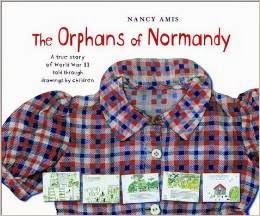
The Orphans of Normandy : A True Story of World War II Told Through Drawings by Children, by Nancy Amis is another touching story based on real-life experiences. In 1946, the author's great-aunt came into possession of a journal, written and illustrated by little girls who had been forced from their orphanage home, La Maison du Clos, in Caen, France, in an effort to remain safe during the Allied invasion of Normandy. The 100 little girls, and their teachers, walked for more than two months, waving white flags all the way, before reaching the safety of Beaufort-en-Vallee, 150 miles away. The narration and illustrations in this book are the actual words and drawings of the girls.

All three of these books are in the "not to be missed" category. And, need I add that if you are in any way the kind of mommy who sometimes cries when she reads aloud, you had better station a box of tissues nearby when you start on this stack.

Thursday, December 07, 2006

Book Review: The Little Riders


This book was an unexpected and delightful little surprise.

Erin, on the 4Real Learning boards, recommended The Little Riders, by Margaretha Shemin. It tells the story of eleven-year-old Johanna, who is visiting her grandparents in Holland when the German occupation occurs. Before he left, Johanna's father exhorted her to "take care of the Little Riders," the beautiful figures that ride out of the clock in the town square every hour. The Little Riders have ridden over the town for hundreds of years, and become as dear to Johanna as they were to her father and her grandfather. She watches them from her attic room window every day, and is entranced by their majesty and loveliness.

Soon, the German army requisitions that attic room in Johanna's grandparents' home, and Captain Braun, a German officer, moves in. My girls picked up on a few clues that Capt. Braun was perhaps a reluctant soldier and a kind man, such as the way he was considerately quiet when he arrived home late at night. And, there was the fact that he seemed to be especially noisy when he was approaching a room during the day (giving Grandfather time to hide his radio.)

Grandfather thinks that the Germans plan to dismantle and take the Little Riders (and melt them down to make ammunition), so he hatches a plot to protect them. Johanna is part of the plan, but her role in saving the Little Riders becomes vital when Grandfather and Grandmother are taken away for questioning at a crucial moment.

What happens next, between Johanna and Capt. Braun, in this deceptively small and simple book, is touching and nicely done.

The Edmisten girls give The Little Riders a big thumbs-up.

Monday, December 04, 2006

Book Review: Escape from Warsaw


I had to track this book down via interlibrary loan, but it was well worth it. The girls loved Escape from Warsaw, by Ian Serraillier, so much that they've asked for their own copies for Christmas.

Escape from Warsaw tells the story of the fictional Balicki children (though the book is based on true events.) As the book opens, their father has been imprisoned by the Nazis. We learn the background of his imprisonment and then read of his escape. Then, we flash back to the night on which the children's mother was arrested by Nazi Storm Troopers. So far, so grim.

But, my girls were hanging in there. Joseph Balicki's escape from prison was daring and compelling. The anticipation that he might get home in time to find his wife and children had intrigued them. But, then came Mother's arrest, and the children's own daring escape from their home before their presence was discovered.

"I'm hooked," said Betsy. "This is good!"

And we remained hooked all the way through. We may have plowed through this one faster than any of the other WWII books we've read thus far.

The children, Ruth, Edek and Bronia, are bright, resourceful, and brave. They discover they must make their way to Switzerland to find their father. In the process they meet Jan, an orphaned boy who becomes a brother, or something like it, to them. As the narrator describes him, he was "a charming bundle of good intentions and atrocious deeds." The children also become separated and endure many hardships and setbacks. But, they remain determined to reunite and to find their father.

Escape from Warsaw was, according to the girls:

Anne-with-an-e: "Awesome!"

Betsy: "Great! Amazing!"

Ramona: "It was good describing."

It's due back at the library this week, so we're fervently hoping that St. Nick will see fit to bring us our very own copy soon.

Friday, December 01, 2006

Snow Treasure

Thanks to additional recommendations on WWII books from 4Real moms, we recently read Snow Treasure and The Secret Seder (thanks, Marilyn), Escape from Warsaw (thanks, Kathryn and Stef), The Little Riders (thanks, Erin) and The Cats in Kraskinski Square (thanks, Irene).

I'll review them all, and will start with Snow Treasure, by Marie McSwigan. The kids loved this book. There's something about outsmarting Nazis that appeals to the righteous rebel in a child.

The plot is simple: a group of villagers in Norway have decided to guard a huge amount of the country's gold. Twelve-year-old Peter Lundstrom's father explains it to him:

"Well, it's like this, Peter. There is a good deal of gold in Norway, more than we'd like to have fall into the hands of an enemy, especially one that might use it to make war on us. So we've decided to guard it with our lives. It isn't the gold itself so much. It's the fact that it may be used to bring death to the very people to whom it belongs .... Other countries have been sending their gold to the United States for safe keeping. That's what we want to do too, if it can be managed."

Peter could hardly believe this was real life and that it was he and his father who were talking and not two characters in a book or a film.


And so begins the adventure of Peter's life. He and many other school children, seemingly enjoying their usual sledding, smuggle gold past the occupying Nazis and onto Uncle Victor's boat, where it will be spirited away to safety.

There is, of course, suspense and danger along the way, as well as opportunities for ingenuity and courage. Without revealing the ending, I will say that it surprised us a bit, though it is basically a happy one.

The frigid Norwegian setting left us (and the characters) feeling cold most of the time, making Snow Treasure a perfect book to cuddle up with while sipping hot chocolate (the audience, of course) and coffee (ReaderMom, of course.)

Monday, November 20, 2006

The Winged Watchman

This is such a great book.

Anne-with-an-e and Betsy were reluctant to begin this book, because, "It's about boys!" I reminded them that some of our favorite people are boys: Atticus, of course (and they'll someday love fictional Atticus as much as they love our Atticus). Matthew Cuthbert. Dickon. Colin (once Mary Lennox works her magic.) Peter Pevensie (and Edmund -- later, of course.) Lew Tucker. Pa Ingalls. Wilbur the pig.

"You have no problem with boys," I assured them, and we started the book.

"I like this book," Betsy proclaimed, three pages into it.

I liked it, too. It has everything one would expect from Hilda van Stockum: serious subject matter, balanced with humor; an unflinching examination of right and wrong; real children who say and do real things; excitement, suspense, danger and surprises; heartwrenching (but not graphic) realism depicting the losses and grief families suffered in World War II; real friendship; faith. And, it has something else every child loves: puppies.

It also offers this lovely little tribute to mothers:

Father stretched out his big hand and put it over Mother's.
"Boys," he said, "I want you to look at this wonderful, brave little mother of yours. Do you know who suffered the most during the war? The mothers. Do you know who worked the hardest? The mothers. And do you know who will get the least praise? The mothers. You haven't any idea, and you never will have, what it cost your mother to keep going, never daunted, never giving up, taking each new blow in her stride and keeping you all happy under the worst possible conditions. Come on, boys, let's give her a cheer. To Mother! Hip, hip, hurrah!"

I wanted to cheer, too.

The Winged Watchman is a beautiful book and has quickly become a treasured favorite of my girls.

Even if it is about boys.

[Next up: A review of Snow Treasure, which we just finished. After that: Escape from Warsaw. We just started this one, and already Betsy is begging for the next read-aloud session every time I put the book down. Such a good sign ....]

Tuesday, October 31, 2006

When Hitler Stole Pink Rabbit

A couple weeks ago I mentioned that we'd started When Hitler Stole Pink Rabbit, by Judith Kerr. We finished it last week, and we all thoroughly enjoyed it. (There were a couple of rough spots, particularly one description of a man driven insane by the cruelty of the Nazis, but we steered around those.)

The "negative" reviews I'd gotten on the 4Real Learning forum weren't really negative. A couple of moms had reported that the book didn't seem to hold their kids' interest. The book is definitely character driven, rather than plot driven, but we tend to like that around here.

The story begins in 1933 with a young Jewish girl named Anna, and her family. Anna's father is a famous writer who perceptively believes it best for his family to flee Germany before Hitler is elected. The rest of the book follows the next few years as the family seeks refuge in Switzerland, France, and finally, England.

As the family leaves Germany by train, Anna pages through a book a friend has given her for the trip. It's about famous people, and describes their "difficult childhoods." Anna wonders if she will ever be famous, but sadly rejects the notion, as it appears to her that one must have a difficult childhood in order to be famous. Anna's own perception of what constitutes a "difficult childhood" is a lovely and recurring theme throughout the book.

My girls liked Anna immensely, and were also amused by her initially underachieving older brother, Max. They especially giggled over Max's attempts to meet the word count on his French essay assignments by padding them with long lists of foods which his characters ate. In each essay, the feasting was followed by, "And then they all burst." (Later in the book, when Anna and Max "burst into laughter," Ramona cried with delight, "I knew there would be more bursting!")

We identified with quite a lot with things that related to our homeschooling life. When Anna was struggling to learn French, her mother comforted her with this knowledge, something every teacher (and experienced student) has witnessed:

"Look," said Mama, "these things don't always happen as you expect. When I was studying music I sometimes struggled with something for weeks without getting anywhere at all -- and then suddenly, just when I felt it was quite hopeless, the whole thing became clear and I couldn't think why I hadn't seen it before. Perhaps it will be like that with your French."

And, I loved this passage about the difference between learning history through a list of dates, and learning it through "living stories." When Anna's papa asked her what she had learned about Napoleon, she rattled off an amazing list of dates and events.

"What an extraordinary way to learn about Napoleon," said Papa. "Is that all you know?"

"But it's everything!" said Anna, rather hurt, especially as she had not made a single mistake.

Papa laughed. "No, it's not everything," he said, and settling down on her bed he began to talk about Napoleon. He told the children about Napoleon's childhood in Corsica with his many brothers and sisters, about his brilliance at school and how he became an officer at fifteen and commander of the entire French army at the age of twenty-six; how he made his brothers and sisters kings and queens of the countries he conquered but could never impress his mother, an Italian peasant woman.

"C'est bien pourvu que ca dure," she would say disapprovingly at the news of every new triumph, which meant, "It's good as long as it lasts."

Then he told them how her forebodings came true, how half the French army was destroyed in the disastrous campaign against Russia, and finally of Napoleon's lonely death on the tiny island of St. Helena.

Anna and Max listened entranced.

"It's just like a film," said Max.

"Yes," said Papa thoughtfully. "Yes, it is."

(This is a bit of foreshadowing as well, but I won't give that away.)

A bit later, Anna's parents are considering sending the children to live with their grandmother for a time, while they search for housing and work in England. Anna panics, fearful about the family splitting up.

"It's just that I think we should stay together," she said. "I don't really mind where or how. I don't mind things being difficult, like not having any money, and I didn't mind about that silly concierge this morning -- just as long as we're all four together."

"But Anna," said Mama, "lots of children leave their parents for a while. Lots of English children go to boarding schools."

"I know," said Anna, "but it's different if you haven't got a home. If you haven't got a home, you've got to be with your people." She looked at her parents' stricken faces and burst out, "I know! I know we have no choice and I'm only making it more difficult. But I've never minded being a refugee before. In fact, I've loved it. I think the last two years, when we've been refugees, have been much better than if we'd stayed in Germany. But if you send us away now I'm so terribly frightened ... I'm so terribly frightened ...."

"Of what?" asked Papa.

"That I might really feel like one!" said Anna and burst into tears.

As someone who has felt like a nomad much of her life, I loved this illustration of how little "place" can mean and how much -- everything, in fact -- family means.

When Hitler Stole Pink Rabbit (and I'll leave it to your reading to find out what the title means) was a lovely book, wonderfully written and beautifully conveying the message that all kinds of obstacles can be overcome with the love and support of family.

Monday, October 16, 2006

When Hitler Stole Pink Rabbit

Recently, I posted a question about this book on the 4Real Learning forum. We were between read-alouds in our WWII unit, waiting for Hilda Van Stockum's The Winged Watchman to arrive. I wondered if I should pick up "Pink Rabbit" from our library in the interim.

I got mixed reviews, so decided to give it a try.

We're only a few pages into it, but so far we're really enjoying it. My girls can completely identify with Anna, who has this reaction to a recent purchase:

She unpacked her new crayons and took them all out of their box. There was a good pink and quite a good orange, but the blues were the best. There were three different shades, all beautifully bright, and a purple as well.


I can see why the boys, mentioned on the 4 Real forum thread, didn't find this to be action-packed. But my budding little writers find Anna to be just the kind of girl they'd like to spend some time with:

Lately she had been producing a number of illustrated poems which had been much admired both at home and at school. There had been one about a fire, one about an earthquake and one about a man who died in dreadful agonies after being cursed by a tramp. Why not try her hand at a shipwreck? All sorts of words rhymed with sea and there was "save" to rhyme with "wave" and she could use the three new blue crayons for the illustration. She found some paper and began.

Soon she was so absorbed that she did not notice the early winter dusk creeping into the room ....

And in this exchange, Anna's father, a writer, offers her some sage advice that my made my girls light up with its truth:

Anna said, "Papa, do you really like the poem?"

Papa said he did.

"You don't think it should be more cheerful?"

"Well," said Papa, "a shipwreck is not really a thing you can be very cheerful about."

"My teacher Fraulein Schmidt thinks I should write about more cheerful subjects like the spring and the flowers."

"And do you want to write about the spring and the flowers?"

"No," said Anna sadly. "Right now all I seem to be able to do is disasters."

Papa gave a little sideways smile and said perhaps she was in tune with the times.

"Do you think then," asked Anna anxiously, "that disasters are all right to write about?" Papa became serious at once.

"Of course!" he said. "If you want to write about disasters, that's what you must do. It's no use trying to write what other people want. The only way to write anything good is to try to please yourself."


And, the only way to find out whether or not you like a book is to read it yourself. So, we'll push on with this one, and I'll keep you posted.


And, by the way, that copy of The Winged Watchman arrived, and it's a very cool old 1962 edition. Don't you love old books?