Ramona, confiding: "Mommy, last night Daddy let me have a second brownie."
Me: "Really! Well, aren't you a lucky girl? How lucky is that?"
Ramona, eyes shining with the knowledge: "LOTS of lucky!"
~~~~~~~~~~~~~~~~~~~~~~~~
And, Ramona's latest version of a joke:
"Mommy, Pete and Repeat went out on a boat. Pete fell in. Who was left?"
"Repeat?"
"Yeah! You're right!"
(An extended conversation followed between Ramona and Betsy. Betsy, you see, had a deeply felt need to make Ramona understand that when the person to whom one is telling this joke says, "Repeat," that said joketeller must then repeat the joke, otherwise it has no meaning and isn't funny. To which Ramona answered, "Okay," and promptly retold the joke, ending it -- to Betsy's exasperation -- once again with, and of course you knew this was coming, "Yeah!")

Friday, March 31, 2006

The Temperament God Gave You
I've been reading this book -- a gift from my dear friend, Andrea -- and had to share these terrific snippets that open chapter 6, "Understanding Your Child's Temperament":
Love contains the acknowledgment of the personal dignity of the other, and of his or her absolute uniqueness.
-- John Paul II, Letter to Families
Fathers, do not provoke your children to anger, but bring them up in the discipline and instruction of the Lord.
-- Ephesians, 6:1-4
Each child is a unique and unrepeatable person and must receive individualized formation.
-- Pontifical Council for the Family
Thursday, March 30, 2006
I'm so inadequate
Stef's food blog will make you despair of ever being capable in the kitchen (let me make this clear: I count pancakes as "cooking" because it involves turning on a burner and dirtying both a bowl and a pan .... I know ... I'm pathetic.)
But it will also inspire you, cause your mouth to water, spur thoughts such as, "This woman is a food goddess," and make the small child on your lap say, "Ooooh, yummy! Mommy, look at that!"
And then, it will make you think, "Hmmmm ... wouldn't it be nice to hear that at the dinner table more often? And not just when I'm serving peanut butter sandwiches?"
But it will also inspire you, cause your mouth to water, spur thoughts such as, "This woman is a food goddess," and make the small child on your lap say, "Ooooh, yummy! Mommy, look at that!"
And then, it will make you think, "Hmmmm ... wouldn't it be nice to hear that at the dinner table more often? And not just when I'm serving peanut butter sandwiches?"
Wednesday, March 29, 2006
And if you want your book signed ....
I just responded to a comment about The Catholic Homeschool Companion and thought I'd mention here that the book is available for a discount through Maureen's website. When you order from there, Maureen will also sign it for you -- just make a note of how you'd like it inscribed!
The Catholic Homeschool Companion

I've been enjoying -- no, make that delighting in -- The Catholic Homeschool Companion, which is edited by Maureen Wittmann and Rachel Mackson. I've been dipping in, tasting, sampling, savoring, going back for seconds and spending time digesting.
This book is indeed a wonderful companion for homeschooling families (and not just Catholic families, I might add, because so many of the rich ideas apply across the board to all kinds of homeschoolers.)
It's hard to choose a favorite essay, or even a handful of favorites. The book, after all, tops 400 pages. You can see the table of contents here. A few highlights for me so far:
There's an in-depth essay by Pattie Kelley-Huff on art appreciation that is outstanding and offers examples and resources. Laurie Navar Gill details how to start a geography club, and ties geography very naturally into a Christian's call to be a missionary. Alicia Van Hecke's apologetics booklist is invaluable and Maureen Wittman has practical and useful ideas for teens on polishing up their job search skills.
MacBeth Derham weighs in with her always-helpful ideas on getting kids out of the house and into nature. Rachel Watkins shares openly in an honest and moving essay about homeschooling while suffering with a chronic illness.
The entire chapter on dads, for dads and by dads (with essays by Steve Wood, Frederick Cabell, Jr., Ed Rivet and Dan McGuire) is terrific. I almost called this chapter "dessert" but on reflection, it's more like having strawberries after a meal: absolutely delicious, and most certainly a treat, but as healthy and nutritionally necessary as the rest of the meal ... because a healthy homeschool is one that not only acknowledges dad, but also relies on him, recognizing his place as the spiritual head of the family and thus of the homeschool. I'm reminded of the old saying, "The father is the head of the household, and the mother is the heart." Or, of another observation made by a priest friend: "The father is the head, and the mother is the neck that turns the head." The team effort that's necessary shouldn't be a sweet extra.
Pete Vere is on the scene, to outline and assure us of our canonical rights regarding sacraments. There's a chapter on "Finding Inspiration" and you'll find exactly that in essays by Cay Gibson, the Wittmans, Nicola Martinez, Janet Cassidy and Susie Lloyd. Home management is covered, and one would expect no less of The Thrifty Homeschooler. And, perhaps one of the biggest treats is hearing from homeschooled students themselves, in the final chapter.
The Catholic Homeschool Companion is enlightening, entertaining, and edifying reading for any homeschooling mom or dad. It's sure to be my companion on the journey for a long time to come.
Monday, March 27, 2006
And in case you're wondering
how I could possibly have time for all these posts today, here's the answer. Ramona got up waaaaaay too early this morning, thus depriving me of my usual blog-before-the-kids-get-up session. So, I've been indulging in some surfing and posting because she's now been blissfully asleep in my arms for quite awhile.
A Lenten Tea at Cottage Blessings
This is one of the most beautiful and creative ideas I've ever seen. What a meaningful way to incorporate Scripture into an already beloved ritual, and to teach about God's word in a way that is alive and vital for one's children.
Alice, you are a treasure and an inspiration to so many! Thank you for all your enchanting, sublime and moving ideas.
Alice, you are a treasure and an inspiration to so many! Thank you for all your enchanting, sublime and moving ideas.
Speaking of To Kill a Mockingbird ...
... Lissa has a wonderful post about books to read before you die, and about how arbitrary some of these lists can be. She also makes insightful observations about the way in which some things can not be appreciated when one is in high school. As Atticus and I have discussed, some things simply can not be seen clearly through the lens of youth.
Capote

Yeah, yeah, stayed up too late again with Atticus watching a movie. Capote is an amazing film. Of course I had to close my eyes at several points (when the Clutter family was found, when Capote views the photographs from the crime scene, when Perry finally details the night of the killings for Truman) but for the most part, this is an incredible character study and the very sad tale of a man who was so determined to write a great book that he sold his soul in the process. The movie doesn't pull any punches -- it is clear what Capote was doing, and it's clear, in the end, that it destroyed him.
Not enough time to write a thoughtful review, but why bother when I can refer you to this review from Roger Ebert?
One thing I loved about the movie (and Ebert alludes briefly to this, but doesn't give a lot of the detail) is the way in which Harper Lee is portrayed as the grounded, moral center of the film, and the counterpoint to what Capote is doing. She's just as I would imagine the author of To Kill a Mockingbird to be. (Lee and Capote were childhood friends, and he's the person on which the character of Dill, in her book, was based.)
It's an amazing movie.
Beautiful gifts

which help to feed the hungry. Click here to see gift items available through the Hunger Site.
Click here to find items that you can be sure are fair trade goods.
The Hunger Site is not a political site, but is simply a place that tries to get food to where it is needed: to hungry people. Clicking regularly -- it really is as simple as that -- is a tiny way to help.
And, as I browse the site for some Easter basket ideas, I see that my girls would love to have these.

Another site, Food for the Poor, offers coupons you can print out and give to others, letting them know that a donation has been made in their name. Depending on the amount you donate, you might be feeding a family for a month, or a child for a year.
A good read:
ZENIT - The World Seen From Rome
Code: ZE06032608
Date: 2006-03-26
Holy See Address at U.N. Food Conference
"Put Common Values Before Individual Interests"
VATICAN CITY, MARCH 26, 2006 (Zenit.org).- Here is the text of a speech given by Monsignor Renato Volante, the Holy See's permanent observer to the Food and Agriculture Organization of the United Nations, during the 28th session of the FAO Conference for the Near East. The conference was held March 12-16 in Sana, Yemen.
* * *
Mr. Chairman,
1. I wish first of all to thank you for giving me this opportunity to address this session and also to congratulate you on your election. In particular I would like to thank the Yemen government for the kind hospitality of this conference called to intensify the response to the development challenges in the Near East, first of all in rural growth and food production.
The Holy See, as you know, is particularly sensitive to the question of fighting poverty, hunger and malnutrition. She makes herself available with help in consultation and action, but also she encourages the member countries of the region and the FAO to fulfill the task to guarantee the basic needs of peoples.
In fact the engagement of the international community in reaching the Millennium Development Goals calls on this session to propose specific guidelines in order to guarantee effective and consistent agricultural development in the different countries of the Near East region. This can be done concretely through the realization of one specific objective, that is, appropriate food security.
2. In this regard the delegation of the Holy See suggests some points for reflection which may be of support in making adequate political choices and selecting concrete actions to correspond to today's necessities.
Among the causes of lack of agricultural development we observe that it fell to FAO to "constitute" the concept of food insecurity, making it gradually evolve from a mere consideration of a technical order, with reference, that is to the availability of foodstuffs in stock, to a situation which denies a real and true human right. These data are for us a source of profound disappointment, especially considering that our world is enjoying, in general, a progress and a development without precedents in history.
The meaning of nutrition should be specified especially in respect to the role that the state should play, in guaranteeing its implementation and thereby its enjoyment by the people. The question directly touches the duties of the FAO Summit and therefore urges for their confirmation. In fact, to guarantee the right of persons and peoples to nutrition, in the absence or lack of the capacity of the single state to do so, other states and the intergovernmental institutions are called upon to come to its aid.
The duty assumed by the different countries concretizes precisely this aspect in the concept of food security, foreseeing an effort of solidarity to guarantee the nutrition of all, and at least to reduce by half the number of the undernourished or starving people by 2015, through the integrated efforts of states and international organizations.
Moreover, comprehensive methods of intervention to struggle against hunger, should certainly pay due attention to all factors of poverty. But it is important to bear in mind that to link food security to other situations, although important, due to their different aims and principles, might however prevent us from mobilizing all the forces required for such a struggle. Now, this approach should also be considered in reference to the impact of recent development in the Near East region regarding trading environment and its implication for food security and agricultural development.
The delegation of the Holy See points out that also in this issue, the adoption of measures in order to achieve sustainable livelihoods, rural and economic growth linked to a concrete social equity and special attention to the vulnerable groups, is an essential imperative. To establish strategies it is necessary to take into account not only the fundamental rights of peoples or communities, but also the respect of everyone's conscience as far as different tradition and cultures are concerned in the Near East. The action should, therefore, involve the education, the training and a comprehensive approach regarding the fundamental values.
Mr. Chairman,
3. In realizing this effort, required today in the engagement endorsed by FAO member countries, the delegation of the Holy See confirms the availability of the Catholic Church, and her various sectors and institutions, to cooperate in the activities of humanization in the realities of hunger, underdevelopment and poverty, a support that would be considered not only as a possibility of logistical support, but also as a source of ideal and programmatic inspiration.
In guaranteeing to every person the possibility of having a qualitative standard of life and adequate food security, we participate in the great design of creation and we have the chance to put common values before individual interests. The international relations today, following the desire of every people to peaceful coexistence, require new forms of solidarity and communion in the implementation of programs and action, according to the fundamental principles of humanity and justice.
Thank You, Mr. Chairman
Gratia Plena
From Pope Benedict XVI's Homily on the Annunciation:
To read the full text, go here.
From generation to generation, the wonder evoked by this ineffable mystery never ceases. Saint Augustine imagines a dialogue between himself and the Angel of the Annunciation, in which he asks: "Tell me, O Angel, why did this happen in Mary?" The answer, says the Messenger, is contained in the very words of the greeting: "Hail, full of grace" (cf. Sermo 291:6). In fact, the Angel, "appearing to her", does not call her by her earthly name, Mary, but by her divine name, as she has always been seen and characterized by God: "Full of grace - gratia plena", which in the original Greek is 6,P"D4JTµXv0, "beloved" (cf. Lk 1:28).
Origen observes that no such title had ever been given to a human being, and that it is unparalleled in all of Sacred Scripture (cf. In Lucam 6:7). It is a title expressed in passive form, but this "passivity" of Mary, who has always been and is for ever "loved" by the Lord, implies her free consent, her personal and original response: in being loved, Mary is fully active, because she accepts with personal generosity the wave of God’s love poured out upon her. In this too, she is the perfect disciple of her Son, who realizes the fullness of his freedom through obedience to the Father.
To read the full text, go here.
Saturday, March 25, 2006
The Solemnity of the Annunciation of the Lord

Yes, once again we have a Solemnity to celebrate! Atticus and I just may indulge in burgers tonight. We've given up meat for Lent, but today doesn't "count", of course. A Solemnity, as I mentioned on the Solemnity of St. Joseph (normally March 19th, but moved to the 20th this year, as the 19th fell on a Sunday) is a feast on a par with a Sunday (and of course, every Sunday is a mini-Easter, even during Lent.)
I love this sane and balanced attitude of Mother Church. Although we are encouraged to sacrifice during Lent, Mom Church never lets us forget that our Lord is risen indeed, and even during a season of penance and self-examination, there are days in which we are fairly commanded to celebrate. Being an obedient Catholic, that is exactly what I will do.
For ideas, see (as always) some excellent ones over at Catholic Culture.
For headier reading, visit Catholic-Pages.com for information on the Blessed Mother.
See this link at Priests for Life for a reflection by John Paul the Great (I cannot resist calling him that in anticipation of a title he will surely receive) on the Annunciation.
For another page that is wonderfully rich in ideas for celebrations, see Women for Faith and Family.
Finally, consider doing a spiritual adoption of a child conceived at this time of year, and in danger of abortion. No, you don't know the child's name, but that child is out there. (It was my friend Andrea who first introduced this idea to me, ten years ago, when I was a new Catholic.) Then, pray for that child through the nine months from today until Christmas day (don't forget to point out to your children that the Annunciation is celebrated exactly nine months before Christmas!) At Christmas time, donate baby items to a crisis pregnancy center (some parishes do this as a parish-wide prayer project, holding a "baby shower" during Advent to collect needed items for donation.)
However we celebrate today, I pray we remember the lesson for all of us that is at its core: Mary's fiat, her "yes" to the Lord. Where am I withholding my fiat? Is there something I need to say "yes" to that I'm resisting? If so, I pray that the Lord will grant me to grace to say, with Mary, "Let it be done to me according to Thy Word."
(The painting is "The Annunciation" by Henry Ossawa Tanner, 1859-1937. There are so many incredible, beautiful pieces of art from which to choose for the Annunciation -- just Google "Annunciation" under "images" -- but I love the portrayal of the angel in this one, as something that is beyond our vision and comprehension.)
Friday, March 24, 2006
We're on a McCourt kick

Atticus and I recently watched Angela's Ashes on DVD, and found the author's commentary quite interesting. Frank McCourt was amazed at how realistic the settings were and at how powerfully they evoked his own memories and the mood, look and feel of his childhood.
It is, of course, an extremely sad movie to watch, as the poverty level at which he lived was unbelievable. For example, the family is living in an apartment, the first floor of which is constantly flooded with several inches of water, so they live only in the two rooms upstairs. The boys are shown running into the apartment, splashing through the water in a kid-like, matter-of-fact way (hey, this is just our life, they seem to be saying.) In the commentary, McCourt says, "People ask me, 'Why didn't you just do something about that? Why didn't your parents put down a plank or something to walk across?' and he scoffs at the very idea, with a rejoinder along the lines of, "A plank? If we had a plank, we'd have burned it, because we had to burn everything we could get our hands on to keep warm. We didn't have the luxury of a plank."
The luxury of a plank.
In another scene, the boys are knocking down the wall of the apartment and throwing the pieces into the fire -- again, desperate to keep the fire going and to keep warm.
The movie is full of heartbreak: the constant hunger, the loss (three of Angela's children die, and the narrator says of one of them, something like "We loved him, we played with him ... he died anyway.") Angela falls apart, is abandoned by her alcoholic husband, and then does what she can to keep the rest of the family alive. It is simply heart-wrenching.
Another video we just watched, The McCourts of Limerick, is a short documentary by Conor McCourt, son of Frank's brother, Malachy. It is a video memoir, filled with reminiscing by the four brothers: Frank, Malachy, Michael and Alphie, all of whom live in America.
What really stood out for me in this little film was that the marks left by abandonment never go away. Malachy McCourt, Sr. walked away from his family because he could not stop drinking. Frank and Malachy each have moments in this film in which they can not stifle the tears as they talk about their father, and one is struck by the utter necessity of a father in a child's life, the core importance of the role, the man, and the love that he should, by all ideals, offer. Lacking a perfect relationship, presence, at the very least, is vital. But Malachy Sr. could not even offer that. He just left. And the wound he inflicted is still evident on his "boys" ... grown men of retirement age. It's heartbreaking.
Another thing that struck and saddened me, in both the film and the documentary, is how let down they all felt by the Church. There are some of the usual suspects for a film like this, a bit of Catholic-bashing in terms of the stern lectures on purity and the like (and there are several scenes which many will find extremely offensive, so please be forewarned.) I wanted to cry out to the screen (because I know how bitter it all left McCourt toward the Catholic Church), "It's those individuals, not the entire Church that failed you!" Because it's true that they were failed in many ways by many people in their society, some of whom were clerics. And I want them to know that "the Church" at her core, does not advocate the treatment Frank McCourt received, the feeling (left even by some of the priests he encountered) that he was sub-human because he was "a laner" (the term used disparagingly by the people of Limerick to refer to those who lived in poverty in "the lane.") And yet, in the Angela's Ashes, there is also a lovely scene in which Frank, feeling that all hope is lost, is sitting in prayer before a statue of St. Francis, and a priest sits down to talk to him. Initially, Frank is reluctant to talk or to make a confession -- I think he felt he was already too far gone. But the kind priest coaxes a little conversation out of him, and before he knows it, Frank has made a complete, heart-wrenching, good confession and is absolved. The lightness he feels when he leaves is perfectly done, a perfect illustration of the beauty and cleansing of that sacrament.
I just saw at Amazon that there's a follow-up to The McCourts of Limerick called The McCourts of New York. Atticus and I will have to hunt that one down to complete our McCourt kick.
Thursday, March 23, 2006
But less about him
My friend, Tim, noted in this post at But Less About Me, that sometimes, you just have to splash through a puddle. I grant you, most of us wouldn't think of doing it in rush hour traffic in L.A., but what I love about Tim is that he noticed this guy do it.
(Okay, Tim, so I'd never heard of Imogen Heap ... but I listened to the clip, and she sounds like Laurie Anderson ... from the 80s ... oh, wow, am I old ....)
(Okay, Tim, so I'd never heard of Imogen Heap ... but I listened to the clip, and she sounds like Laurie Anderson ... from the 80s ... oh, wow, am I old ....)
Skip over to the Bonny Glen
because Lissa has a wonderful post about homeschooling.
In the comments, I saw this, from someone identifying himself as a homeschooled kid:
I always wondered "am I normal?" how do you reassure your children? Because no matter what my parents said I still felt different then the world, and that question always ate away at me ...
This saddens me, mostly because of the underlying assumption that there is such a thing as "normal."
What is "normal" anyway? I didn't think I was normal when I was growing up, either. I went to public school, though doing so didn't make me normal. I went to college. That didn't make me normal either. I got a job, struggled to pay the bills and for awhile, I drank to excess, dangerous excess. Did that make me normal? I found God and He changed my life. Did that, finally, make me normal?
Because the funny thing is, no matter where I've been in my life, or what choices I've made, I didn't feel normal. When I was in public school, and started feeling abnormal because I knew I didn't sound like my friends, I made a conscious decision to dumb down my language. I remember the exact moment: I was walking down the hall of my elementary school, a fifth-grader with two of my friends, and I thought to myself, "I just don't sound like they do. But I know how to sound like they do. And I will."
When, as a young adult, I was an atheist, I felt far from the norm of American society. Most people, it seemed to me, went to church, therefore I wasn't normal. Conversely, now that I'm a Christian trying to live my faith in every way, I don't find that I'm in the mainstream. It's not exactly normal to be a homeschooling, NFP-knowing, preschooler-nursing, Magisterium-loving Catholic.
So, what is "normal" anyway? I know the etymology of the word -- it derives from "square" or "right angle", as in a "carpenter's square" -- but that doesn't transfer well to a complex being, such as a human one. Because I don't think I've ever met a single person cut from a perfect square or one who lives a "normal" life. Even the perfect, normal families have crosses, problems, secrets and heartaches that no one outside the family could guess. Of the people I know, on a level deeper than acquaintance, no one thinks of himself or herself as "normal" and yet how many of us persist in holding on to the idea of that elusive standard that we'll never reach?
As Lissa so aptly noted in her post, "weird" (or "not-normal") usually just means "different" ... and it's the weird people who have often gone on to do great things in the world. And a lot of weird people, while they may never do outwardly great things, will find other wonderful weird people, marry them, and lead fulfilling lives, raising weird kids and having a great time through it all.
It's also worth noting that television plays a huge part in depicting a world that is supposedly "normal" but in reality, is nothing like most people's lives. Take, for example, something as basic as housing. Have you ever noticed the standard of living on TV? The "normal" American family -- on TV -- lives in a house situated on a piece of real estate that would be far out of grasp for their real-life counterparts. How many "normal" singles on TV live in great-looking apartments that, in reality, they could never afford? TV sets us up for a feeling of failure just about every time we turn the channel. So, I hope, dear Homeschooled Kid, that you're not looking to popular media for your examples and standards. There are other places for you to look -- places of value -- that will give you so much more by which to judge yourself and your life.
Being normal isn't all it's cracked up to be. I love my abnormal life, and my abnormal choices, and I often find that it's exactly the things that make me "abnormal" that also make me this: Happy.
In the comments, I saw this, from someone identifying himself as a homeschooled kid:
I always wondered "am I normal?" how do you reassure your children? Because no matter what my parents said I still felt different then the world, and that question always ate away at me ...
This saddens me, mostly because of the underlying assumption that there is such a thing as "normal."
What is "normal" anyway? I didn't think I was normal when I was growing up, either. I went to public school, though doing so didn't make me normal. I went to college. That didn't make me normal either. I got a job, struggled to pay the bills and for awhile, I drank to excess, dangerous excess. Did that make me normal? I found God and He changed my life. Did that, finally, make me normal?
Because the funny thing is, no matter where I've been in my life, or what choices I've made, I didn't feel normal. When I was in public school, and started feeling abnormal because I knew I didn't sound like my friends, I made a conscious decision to dumb down my language. I remember the exact moment: I was walking down the hall of my elementary school, a fifth-grader with two of my friends, and I thought to myself, "I just don't sound like they do. But I know how to sound like they do. And I will."
When, as a young adult, I was an atheist, I felt far from the norm of American society. Most people, it seemed to me, went to church, therefore I wasn't normal. Conversely, now that I'm a Christian trying to live my faith in every way, I don't find that I'm in the mainstream. It's not exactly normal to be a homeschooling, NFP-knowing, preschooler-nursing, Magisterium-loving Catholic.
So, what is "normal" anyway? I know the etymology of the word -- it derives from "square" or "right angle", as in a "carpenter's square" -- but that doesn't transfer well to a complex being, such as a human one. Because I don't think I've ever met a single person cut from a perfect square or one who lives a "normal" life. Even the perfect, normal families have crosses, problems, secrets and heartaches that no one outside the family could guess. Of the people I know, on a level deeper than acquaintance, no one thinks of himself or herself as "normal" and yet how many of us persist in holding on to the idea of that elusive standard that we'll never reach?
As Lissa so aptly noted in her post, "weird" (or "not-normal") usually just means "different" ... and it's the weird people who have often gone on to do great things in the world. And a lot of weird people, while they may never do outwardly great things, will find other wonderful weird people, marry them, and lead fulfilling lives, raising weird kids and having a great time through it all.
It's also worth noting that television plays a huge part in depicting a world that is supposedly "normal" but in reality, is nothing like most people's lives. Take, for example, something as basic as housing. Have you ever noticed the standard of living on TV? The "normal" American family -- on TV -- lives in a house situated on a piece of real estate that would be far out of grasp for their real-life counterparts. How many "normal" singles on TV live in great-looking apartments that, in reality, they could never afford? TV sets us up for a feeling of failure just about every time we turn the channel. So, I hope, dear Homeschooled Kid, that you're not looking to popular media for your examples and standards. There are other places for you to look -- places of value -- that will give you so much more by which to judge yourself and your life.
Being normal isn't all it's cracked up to be. I love my abnormal life, and my abnormal choices, and I often find that it's exactly the things that make me "abnormal" that also make me this: Happy.
Wednesday, March 22, 2006
The benefits of modeling proper grammar and usage
Yesterday, Ramona asked me, "Mommy, would you stick my milk cup in the fridge?"
"Sure," I replied. As I placed it on a shelf, she said, "No, I mean literally stick it in the fridge! Put glue on it!" And then she laughed a preschooler's version of a maniacal laugh.
Yes, I do sometimes have to remind myself that she's only three.
On the other hand, and just to balance out the picture for you, she also regularly tells truly bad knock-knock jokes that only a three-year-old could find funny.
Knock, knock.
Who's there?
Me.
Me who?
Me! It's me! Isn't that funny?
Well, no, of course it's not really funny in the least, but everything else she says makes up for it. And, lest all my Ramona posts should sound like bragging, I hasten to add that this child, last week, perfected the art of the tantrum in a way I've never before seen. She's a child of passions and extremes, that much is certain. But we're a family who likes such things, so our dear Ramona is right at home here.
"Sure," I replied. As I placed it on a shelf, she said, "No, I mean literally stick it in the fridge! Put glue on it!" And then she laughed a preschooler's version of a maniacal laugh.
Yes, I do sometimes have to remind myself that she's only three.
On the other hand, and just to balance out the picture for you, she also regularly tells truly bad knock-knock jokes that only a three-year-old could find funny.
Knock, knock.
Who's there?
Me.
Me who?
Me! It's me! Isn't that funny?
Well, no, of course it's not really funny in the least, but everything else she says makes up for it. And, lest all my Ramona posts should sound like bragging, I hasten to add that this child, last week, perfected the art of the tantrum in a way I've never before seen. She's a child of passions and extremes, that much is certain. But we're a family who likes such things, so our dear Ramona is right at home here.
You are what you read, Part II
I often found myself thinking of Charlotte Mason's methods of education as the kids and I read Little Women.
This excerpt is from Chapter 33, in which Jo is trying to learn German from Mr. Bhaer:
I took four lessons, and then I stuck fast in a grammatical bog. The Professor was very patient with me, but it must have been torment to him, and now and then he'd look at me with such an expression of mild despair that it was a toss-up with me whether to laugh or cry. I tried both ways, and when it came to a sniff or utter mortification and woe, he just threw the grammar on to the floor and marched out of the room. I felt myself disgraced and deserted forever, but didn't blame him a particle, and was scrambling my papers together, meaning to rush upstairs and shake myself hard, when in he came, as brisk and beaming as if I'd covered myself in glory.
"Now we shall try a new way. You and I will read these pleasant little MARCHEN together, and dig no more in that dry book, that goes in the corner for making us trouble."
He spoke so kindly, and opened Hans Andersons's fairy tales so invitingly before me, that I was more ashamed than ever, and went at my lesson in a neck-or-nothing style that seemed to amuse him immensely. I forgot my bashfulness, and pegged away (no other word will express it) with all my might, tumbling over long words, pronouncing according to inspiration of the minute, and doing my very best. When I finished reading my first page, and stopped for breath, he clapped his hands and cried out in his hearty way, "Das ist gut!' Now we go well! My turn. I do him in German, gif me your ear." And away he went, rumbling out the words with his strong voice and a relish which was good to see as well as hear. Fortunately the story was the Constant Tin Soldier, which is droll, you know, so I could laugh, and I did, though I didn't understand half he read, for I couldn't help it, he was so earnest, I so excited, and the whole thing so comical.
After that we got on better, and now I read my lessons pretty well, for this way of studying suits me, and I can see that the grammar gets tucked into the tales and poetry as one gives pills in jelly. I like it very much, and he doesn't seem tired of it yet, which is very good of him, isn't it? I mean to give him something on Christmas, for I dare not offer money. Tell me something nice, Marmee.
I, too, have found that teaching grammar and spelling through literature are indeed very much like hiding pills in jelly. The medicine is not noticed yet one is treated ... The lessons are not dry and torturous but rather become delightful.
Tuesday, March 21, 2006
You are what you read
Returning to some thoughts that struck me while reading Little Women with the girls, and revisiting some pages I had dog-eared during the read-aloud (much to Atticus's distress ... he has a strict, personal, no-dog-earing-books policy, whereas I am more lax in my approach, making dog-ear exceptions for certain books or moments. They are however, and I can assure you of this, the tiniest of dog-ears.)
Diverting your attention now from our silly private squabble back to a great work of literature:
Late in the book, when Jo has gone to live in New York City and is making nice little chunks of money for her anonymously written potboilers, Louisa May Alcott observes the following:
But Mr. Dashwood rejected any but thrilling tales, and as thrills could not be produced except by harrowing up the soulsof the readers, history and romance, land and sea, science and art, police records and lunatic asylums, had to be ransacked for the purpose. Jo soon found that her innocent experience had given her but few glimpses of the tragic world which underlies society, so regarding it in a business light, she set about supplying her deficiencies with characteristic energy. Eager to find material for stories, and bent on making them original in plot, if not masterly in execution, she searched newspapers for accidents, incidents, and crimes. She excited the suspicions of public librarians by asking for works on poisons.
She studied faces in the street, and characters, good, bad, and indifferent, all about her. She delved in the dust of ancient times for facts or fictions so old that
they were as good as new, and introduced herself to folly, sin, and misery, as well as her limited opportunities allowed. She thought she was prospering finely, but unconsciously she was beginning to desecrate some of the womanliest attributes of a
woman's character. She was living in bad society, and imaginary though it was, its influence affected her, for she was feeding heart and fancy on dangerous and unsubstantial food, and was fast brushing the innocent bloom from her nature by
a premature acquaintance with the darker side of life, which comes soon enough to all of us.
She was beginning to feel rather than see this, for much describing of other people's passions and feelings set her to studying and speculating about her own, a morbid amusement in which healthy young minds do not voluntarily indulge.
When I read this to the girls, we stopped to talk about it for a minute. First of all, we compared it to my writing ... would this be sort of like Mom writing for "one of those fake magazines" as we call "The National Enquirer" and its ilk? Yes, we all agreed that a good Catholic mom shouldn't write for the fake magazines, no matter how much they might pay for a story.
And what about the effect it was having on Jo? We talked about the power of pictures and ideas, and of how they leap or seep into our minds, of how hard it can be to shake a picture which has caught one off-guard and scared, startled or horrified. By searching out the ugly side of life, in order to spice up her stories, Jo was allowing that ugliness into her mind and her soul, and how could that not have an effect? My older kids have both, I'm sorry to say, seen a few ugly or scary things when I was not quick enough or alert enough to shield them. They know that, once implanted in one's mind, a picture can be hard to shake and they've had the experience of saying, "I wish I'd never seen that." They've also been in "protector" mode: they compared all of this to the way they'll shield Ramona from a scene that would scare her in one of their movies.
They understood.
I can't imagine a better lesson on discernment of literature (and TV viewing, in our century, though lucky Jo didn't have to contend with that) and all because we were reading a great book together.
Who says you need a curriculum to cover this stuff?
Monday, March 20, 2006
Catholic Prayer Book for Mothers
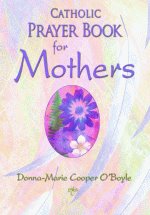
This beautiful little book, Catholic Prayer Book for Mothers, published by Our Sunday Visitor and written by Donna-Marie Cooper O'Boyle, is deceptively slim yet bursting with wisdom, original prayers, advice and the encouragement of one who knows.
Donna, a writer and mother of five, also seems to have peeked into my life. How does she know what a transforming vocation motherhood has been for me? In a reflection entitled "A Glimpse into the Future" she writes:
If a woman could get a glimpse at
What her world would be
When she becomes a mother,
She would be presented with the reality
That her innermost desires and life plans
would be altered or put on hold
because she would be inundated with the care of others.
If she was also allowed to glimpse the unending joy
she would receive as a mother,
There would be no pause to consider,
No hesitation, as she embraced the whole package,
Knowing in her heart that her children will become her life's desires.
And, in "The Rosary, One Decade at a Time" I see my life reflected: the ways in which our children change our prayer lives are to be celebrated, not bemoaned, and God understands when we do such things as say a halting Rosary and sprinkle bits of prayer throughout our days and our duties.
With quotations from Blessed Teresa of Calcutta (who personally encouraged the author), John Paul the Great (who gave Donna his apostolic blessing), Scripture, and a variety of saints, this book is exactly the sort to keep by the bedside, on the prayer table, or in one's purse for the many times we, as mothers, need a boost, a bit of solace or an inspirational lift.
For more information about the author see this link, which tells the lovely story of Donna's relationship with Blessed Teresa of Calcutta.
Finally, the book itself is lovely, with pages of pastels and florals that are calming and beautiful.
Donna speaks straight to a mother's heart, as she embraces her fellow moms with her uplifting and hopeful message of the salvific beauty of our vocation.
Solemnity of St. Joseph

A happy and blessed St. Joseph day! This painting is by Guido Reni, a 17th century Italian artist, and is entitled, "St. Joseph with the Child in his Arms."
St. Joseph's feast day usually falls on March 19, but since yesterday was a Sunday, the observance of this Solemnity (a feast day which is as "high" a celebration as a Sunday, therefore your Lenten sacrifices aren't required of you today) has been moved to today.
Here's another page that lists great resources and reading about St. Joseph.
Saturday, March 18, 2006
Ramona Moments
Ramona: Mommy, I was taking Mr. Putter [editor's note: the cat] for a walk.
Me (with trepidation): Oh?
Ramona: Yes. His tail was the leash.
Me (reining in panic as I survey my child for big, bloody scratches as Mr. Putter has been known to bite things he doesn't like): Oh, no, Sweetie ... that's not a good way to take a kitty for a walk. He doesn't like that.
Ramona: No, it's okay, Mommy! Their tails don't pop off!
How does she do it?
Me (with trepidation): Oh?
Ramona: Yes. His tail was the leash.
Me (reining in panic as I survey my child for big, bloody scratches as Mr. Putter has been known to bite things he doesn't like): Oh, no, Sweetie ... that's not a good way to take a kitty for a walk. He doesn't like that.
Ramona: No, it's okay, Mommy! Their tails don't pop off!
How does she do it?
Friday, March 17, 2006
Star of the Sea
I really like Paul Thigpen (and not just because he's bought a couple of my articles, though it's true I now like him even more.)
His website, Star of the Sea, abounds with information, inspiration and edification. He's such a prolific writer; it's hard to know where to begin with recommendations, but his writings for families are a great place to start. In this one, for example, he offers some fun ideas for Scripture games to play with children, thus deepening everyone's knowledge and appreciation of God's word. And in this one, entitled, "Are You Being Scraped or Scrubbed?" he details the ways in which we can view the challenges of parenthood as that much more worldly dirt being scrubbed from our souls before we reach (or, God willing, skip right past) purgatory.
I'm reminded of C.S. Lewis and his explanation of purgatory, one of the first that made sense to me in my pre-Catholic days: Lewis spoke of the need to be stripped of our filthy rags, scrubbed and made gloriously clean before we stand in the presence of God. As Lewis pointed out, we want to be cleaned up:
"Our souls demand purgatory, don’t they? Would it not break the heart if God said to us, ‘It is true, my son, that your breath smells and your rags drip with mud and slime, but we are charitable here and no one will upbraid you with these things, nor draw away from you. Enter into the joy’?
Should we not reply, ‘With submission, sir, and if there is no objection, I’d rather be cleansed first.’
‘It may hurt, you know.’
‘Even so, sir.’"
But back to Paul Thigpen's articles. They're accessible and to-the-point but also dig deep and challenge the reader. His apologetics and his pieces on theology and spirituality are short enough to digest in one sitting, but meaty enough to give plenty of nourishment, sustenance and food for thought (to seriously belabor the metaphor.)
And his prayers are striking in their beauty and simplicity.
If you haven't read his work, do yourself a favor and spend a little time with the Star of the Sea.
His website, Star of the Sea, abounds with information, inspiration and edification. He's such a prolific writer; it's hard to know where to begin with recommendations, but his writings for families are a great place to start. In this one, for example, he offers some fun ideas for Scripture games to play with children, thus deepening everyone's knowledge and appreciation of God's word. And in this one, entitled, "Are You Being Scraped or Scrubbed?" he details the ways in which we can view the challenges of parenthood as that much more worldly dirt being scrubbed from our souls before we reach (or, God willing, skip right past) purgatory.
I'm reminded of C.S. Lewis and his explanation of purgatory, one of the first that made sense to me in my pre-Catholic days: Lewis spoke of the need to be stripped of our filthy rags, scrubbed and made gloriously clean before we stand in the presence of God. As Lewis pointed out, we want to be cleaned up:
"Our souls demand purgatory, don’t they? Would it not break the heart if God said to us, ‘It is true, my son, that your breath smells and your rags drip with mud and slime, but we are charitable here and no one will upbraid you with these things, nor draw away from you. Enter into the joy’?
Should we not reply, ‘With submission, sir, and if there is no objection, I’d rather be cleansed first.’
‘It may hurt, you know.’
‘Even so, sir.’"
But back to Paul Thigpen's articles. They're accessible and to-the-point but also dig deep and challenge the reader. His apologetics and his pieces on theology and spirituality are short enough to digest in one sitting, but meaty enough to give plenty of nourishment, sustenance and food for thought (to seriously belabor the metaphor.)
And his prayers are striking in their beauty and simplicity.
If you haven't read his work, do yourself a favor and spend a little time with the Star of the Sea.
A blessed Maewyn Succat Day
 Huh?
Huh? If your kids have watched Veggie Tales' "Sumo of the Opera" (or perhaps are simply more erudite than mine and learned it in a somewhat more respectable way, such as through some kind of study) then you know that St. Patrick's given name may have been Maewyn Succat. My kids have delighted in the short St. Patrick story on the Sumo video. They especially love the Veggie guys' take on paganism, which is a riot (their take on it, that is, not paganism itself ....)
Other fun and erudite St. Patrick's Day resources:
Read about St. Patrick at New Advent (the Catholic Encyclopedia).
Check out Catholic Online.
Catholic Culture is always full of great ideas.
Enjoy some Enchanted Learning.
Do a virtual pilgrimage up Croagh Patrick either here or here.
And finally, pray the beautiful prayer, St. Patrick's Breastplate:
I bind to myself today
The strong virtue of the Invocation of the Trinity:
I believe the Trinity in the Unity
The Creator of the Universe.
I bind to myself today
The virtue of the Incarnation of Christ with His Baptism,
The virtue of His crucifixion with His burial,
The virtue of His Resurrection with His Ascension,
The virtue of His coming on the Judgement Day.
I bind to myself today
The virtue of the love of seraphim,
In the obedience of angels,
In the hope of resurrection unto reward,
In prayers of Patriarchs,
In predictions of Prophets,
In preaching of Apostles,
In faith of Confessors,
In purity of holy Virgins,
In deeds of righteous men.
I bind to myself today
The power of Heaven,
The light of the sun,
The brightness of the moon,
The splendour of fire,
The flashing of lightning,
The swiftness of wind,
The depth of sea,
The stability of earth,
The compactness of rocks.
I bind to myself today
God's Power to guide me,
God's Might to uphold me,
God's Wisdom to teach me,
God's Eye to watch over me,
God's Ear to hear me,
God's Word to give me speech,
God's Hand to guide me,
God's Way to lie before me,
God's Shield to shelter me,
God's Host to secure me,
Against the snares of demons,
Against the seductions of vices,
Against the lusts of nature,
Against everyone who meditates injury to me,
Whether far or near,
Whether few or with many.
I invoke today all these virtues
Against every hostile merciless power
Which may assail my body and my soul,
Against the incantations of false prophets,
Against the black laws of heathenism,
Against the false laws of heresy,
Against the deceits of idolatry,
Against the spells of women, and smiths, and druids,
Against every knowledge that binds the soul of man.
Christ, protect me today
Against every poison, against burning,
Against drowning, against death-wound,
That I may receive abundant reward.
Christ with me, Christ before me,
Christ behind me, Christ within me,
Christ beneath me, Christ above me,
Christ at my right, Christ at my left,
Christ in the fort,
Christ in the chariot seat,
Christ in the poop [deck],
Christ in the heart of everyone who thinks of me,
Christ in the mouth of everyone who speaks to me,
Christ in every eye that sees me,
Christ in every ear that hears me.
I bind to myself today
The strong virtue of an invocation of the Trinity,
I believe the Trinity in the Unity
The Creator of the Universe.
Wednesday, March 15, 2006
Yes, it does drive me crazy
Why, why, why can't people figure out apostrophe use? Rules for apostrophes are among the easiest rules of grammar and yet it seems they have been disregarded since sometime in the late 20th century.
Here's a blog (ht to PalmTree Pundit) devoted to daily examples of abuse.
Its a sad day when writer's, business' people and grocery store's cant figure out these oh-so-simple thing's.
Sigh.
And while I'm at it, have you read Eats, Shoots & Leaves by Lynne Truss? Grammar curmudgeons of the world must unite.
Here's a blog (ht to PalmTree Pundit) devoted to daily examples of abuse.
Its a sad day when writer's, business' people and grocery store's cant figure out these oh-so-simple thing's.
Sigh.
And while I'm at it, have you read Eats, Shoots & Leaves by Lynne Truss? Grammar curmudgeons of the world must unite.
Betsy's latest

passion is Braille. She and Anne like to get a book from our library that is entirely in Braille, and Betsy is trying to teach herself to read it. So, last week I found a site for her that is loads of fun. It's called The Braille Bug and is part of the website of the American Foundation for the Blind.
So far, Betsy has played the Name Game (type in a word and see it in Braille), Trivia Mania and Riddles. She hasn't yet seen this page ... I'm certain she hasn't seen it or I would already have heard, "Oh, Mom! We've got to have this!"
We're late, as usual

Roughly a year late in celebrating the 15th anniversary of the Hubble Space Telescope, but my kids are suddenly interested and fascinated. Check out the video at this link and enjoy the breathtaking show.
Thank you
so much, to all of you who sent comments, sympathy and condolences for the loss of my husband's mother. Your prayers, concern and support meant so much to us. Thank you.
Tuesday, March 14, 2006
Ramona is back
And she's tired. And you know how it is when you're tired. What might, on an ordinary day, be just a minor annoyance can become downright tragical. And so, when Ramona bumped her head on the desk, immediately after finding out that Betsy did not want to play "Winn Dixie" (I'm not sure which of them would have been assigned the part of the dog) it was suddenly, overwhelmingly, too much.
As the tears welled up, she said, "Oh, no! Now here's something else I have to cry about!"
(And today's post, Aunt Nancy, is just for you. I hope it makes you smile.)
As the tears welled up, she said, "Oh, no! Now here's something else I have to cry about!"
(And today's post, Aunt Nancy, is just for you. I hope it makes you smile.)
Friday, March 10, 2006
Prayers, please
I won't be blogging for awhile ... please pray for all in our family as we mourn the loss of my dear mother-in-law ....
May she rest in peace in the arms of our Lord.
May she rest in peace in the arms of our Lord.
Wednesday, March 08, 2006
A drink in the desert
I spent yesterday with a dear, close friend who's visiting from out of town. She used to live just a couple of minutes away from me but moved to Minneapolis five years ago.
(An aside: Want a new job? Like to see a new part of the country? The current joke in my life is that if you'd like to move up and on from this town, become my good friend. God will surely see fit to move you on somewhere else. Not sure what His plan is in all of this, but it's been happening with alarming frequency. What's that you say? This isn't all about me? Maybe it's about God's plan for them? Naaahhh....)
Back to my day (see? It is about me.) My friend and I spent a goodly amount of time in the car, happily talking our throats dry, driving to see another dear friend, our favorite priest on earth. He celebrated Mass then cooked a delicious lunch as we chatted, laughed, whined, complained, celebrated, speculated and reminisced.
I was reminded of this quote from C. S. Lewis's Screwtape Letters, in which Wormwood is speaking to his protege:
I divide the causes of human laughter into joy, fun, the joke proper and flippancy. You will see the first among friends and lovers reuniting on the eve of a holiday. Among adults some pretext in the way of jokes is usually provided, but the facility with which the smallest witticism produces laughter at such a time, shows that that's not the real cause. What the real cause is we do not know. Something like it is expressed in much of that detestable art which the humans call music, and something like it occurs in heaven.
Yes. It didn't take much to make me laugh yesterday, and my friends laughed at my weakest jokes. The conversation itself didn't matter so much as did the context ... we were friends, together again, with a shared history and an understanding of one another's lives. I felt, quite simply, joy.
A snippet of music, a much-appreciated drink in the desert of Lent and a peek into Heaven ... this is what such occasions are. After all, as Lewis also said, "Joy is the serious business of Heaven.
May you feel some of Heaven's serious business today.
(An aside: Want a new job? Like to see a new part of the country? The current joke in my life is that if you'd like to move up and on from this town, become my good friend. God will surely see fit to move you on somewhere else. Not sure what His plan is in all of this, but it's been happening with alarming frequency. What's that you say? This isn't all about me? Maybe it's about God's plan for them? Naaahhh....)
Back to my day (see? It is about me.) My friend and I spent a goodly amount of time in the car, happily talking our throats dry, driving to see another dear friend, our favorite priest on earth. He celebrated Mass then cooked a delicious lunch as we chatted, laughed, whined, complained, celebrated, speculated and reminisced.
I was reminded of this quote from C. S. Lewis's Screwtape Letters, in which Wormwood is speaking to his protege:
I divide the causes of human laughter into joy, fun, the joke proper and flippancy. You will see the first among friends and lovers reuniting on the eve of a holiday. Among adults some pretext in the way of jokes is usually provided, but the facility with which the smallest witticism produces laughter at such a time, shows that that's not the real cause. What the real cause is we do not know. Something like it is expressed in much of that detestable art which the humans call music, and something like it occurs in heaven.
Yes. It didn't take much to make me laugh yesterday, and my friends laughed at my weakest jokes. The conversation itself didn't matter so much as did the context ... we were friends, together again, with a shared history and an understanding of one another's lives. I felt, quite simply, joy.
A snippet of music, a much-appreciated drink in the desert of Lent and a peek into Heaven ... this is what such occasions are. After all, as Lewis also said, "Joy is the serious business of Heaven.
May you feel some of Heaven's serious business today.
Monday, March 06, 2006
Ramona Today
Upon finding that she would have to wait two more minutes for her turn to use the Play-Doh accessory for which she was truly pining, Ramona said,
"OOOHHH! I don't like this complication!"
"OOOHHH! I don't like this complication!"
File under "amazing" category

This piece from NPR (courtesy of the After Abortion blog) is one of those stories that makes you smile, wonder, and think, "Isn't God's design incredible?" and "How many other unknown but eternal connections do we have to our children?"
Today's favorite books

Whenever I want to introduce my kids to an artist or a composer, I turn to Mike Venezia for help. I love his books, Anne and Betsy love his books, and they are always a springboard for further discussion and investigation.
Venezia books are, in short, loads of subliminally educational fun.
Label Me Schizophrenic

My latest article is out, in Home Education Magazine.
The article is entitled, "Label Me Schizophrenic" and grew out of a post on the Real Learning discussion list (a place on the web that is rich, fertile ground for all kinds of discussions that I greatly appreciate) about the possiblilty of combining a child's self-directed education with direction and guidance from the parent.
The article begins:
Classical. Charlotte Mason. Unschooler. Yup, that’s me. There’s just a slight problem. The labels contradict one another, don’t they? Yes. And no. They’re accurate, but inaccurate. (What is the sound of one textbook flapping? I’ll move beyond the Zen musing and into my point.)
I dislike labels. I refuse to label our homeschool. My aversion to labels has been both advantageous and embarrassing over the five years we’ve been doing this: advantageous, because I’m free to approach learning in a variety of ways, and embarrassing (in the beginning, though I’m over that now) because I never had a succinct answer to, "What curriculum do you use?" I used to hem, haw, stutter and say something about an eclectic mix. I was initially reluctant to say, "We unschool," because most people interpreted that as, “Yes, I really do homeschool because I’m lazy.” I shied away from saying “We’re pursuing a Charlotte Mason education” because I didn't follow CM methods to the letter, and hadn’t even read all of her original writings. I didn't want to say "we’re classical" because, although some classical elements were present, we fell short of the mark and I feared someone would ask me to say, “My child adores The Iliad” in Latin, Greek and one other language of my choice.
So, what was I? It used to bother me, not having a definitive answer. But these days, when faced with The Question, I look my inquisitor in the eye and brazenly reply, "I design our curriculum myself." It’s a true and simple answer that covers the fluid flexibility of our days. Sometimes I design structure, routines and the tackling of a workbook. At other times, our copywork from classic literature would make Charlotte Mason quiver with pride at the thought of her mentoring. And often – quite often – my design includes open-ended time full of reading, writing, observing, talking, experimenting and growing.
Saturday, March 04, 2006
Broken Flowers
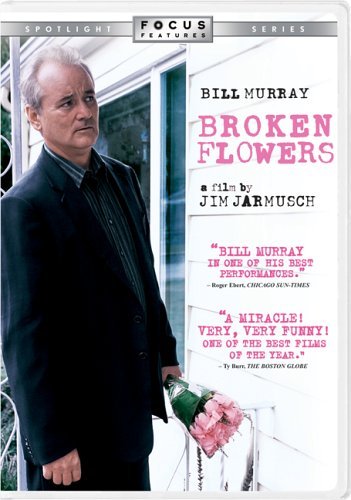
Okay, confession time: I like weird movies. I sometimes like "arthouse movies." I like things that are different, thoughtful and unpredictable. I don't like "different" just for difference's sake, but I do like to see something original. And yes, I actually own a copy of My Dinner with Andre.
Atticus rented Jim Jarmusch's Broken Flowers last weekend and we stayed up too late watching it (I always stay up too late watching DVDs that Atticus comes home with, because we never start them until after the kids are in bed. You know you're getting old when you watch the clock for the DVD's start time and think, "I really hope I can stay awake for this whole thing so that we haven't wasted $3.50.")
At any rate, here's the review: I had no trouble staying awake and we loved it. This movie is alternately funny and sad, absurd and heart wrenching, interesting, thoughtful, compelling and a little exasperating, just like its main character.
Bill Murray excels at ennui. And Don Johnston is ennui personified (and, yes, he's an over-the-hill Don Juan, and there's no chance you'll miss that point, since he's watching "Don Juan" when the movie opens and then his friend mentions, roughly 17 times, that he's just like a Don Juan. A small failure in subtlety in the film ....) He can barely get himself to move off of his couch whether it's to stop his latest girlfriend from leaving him or to go to bed. He sleeps there, watches TV there, does nothing there. Getting up off the couch would require ... thought. Effort. Don doesn't seem to want much to do with either of those things.
Then, a mysterious letter arrives, telling Don that he has a son who is 19 years old, and that that son may be trying to find him. The woman who wrote the letter didn't sign it. Don plans to do (what else?) nothing. Until Don's friend, Winston, puts together a plan and an itinerary for Don (because he knows, and we know, Don would never do it himself, but there just might be enough soul left in him to do it if someone else propels him.)
So, he sets out on an odyssey to visit the four women who are candidates for the job of mother-of-his-son. His journey is full of sadness, surprise, humor and pathos. There's one particularly jolting scene of nudity (gratuitous, I'm afraid, and the same thing could have been accomplished with some coverage) that is so sad that I could only shake my head at the character and her motivations. There are too many of these girls in the world, and they're all looking for their fathers. Our anti-hero does, at least, show that his soul is intact when he quickly exits the scene.
And I'm pleased to report that the happiest people in this movie, Don's neighbors, are a happily married couple with five noisy, silly, adorable kids. It's clear that Neighbor Winston loves his wife and children, and that Don can see that they have ... something. He's not entirely sure what, or that he wants it, but he sees it.
And, in the end, I think we see that Don wants something more than the random acts that have so far defined his life. The film is quite ambiguous at the end -- did we meet the son? Did Don? Which woman was it? Clearly it was ... but, no ... maybe not.
I won't say more, as I don't want to ruin it, but it's the kind of film that I appreciate for its depth and level of thought, the kind of thing that has an undercurrent and room for speculation and discussion. I could not have predicted a single thing that happened in Broken Flowers and that alone is high praise for a movie these days.
(Postscript, added Sunday afternoon: Do be aware that the language is rough and the nude scene is full frontal. Men, take note: you'll need to keep "custody of the eyes" right after Lolita -- yes, that's her name -- leaves the room. Your wife will love you for looking away. The film is rated R.)
Today's Ramona quote
Atticus and I were both stealing a few minutes of reading time today (I was engrossed in The Catholic Homeschooling Companion -- more on that later -- and Atticus was reading something about the Civil War.) The kids had been playing quietly together in the basement, and I was relishing this time, feeling quite decadent with so many pages under my belt at one sitting.
Ramona walked into the room, sighed heavily and said, "You guys are always acting like grown-ups," and shaking her head, she exited, presumably to find someone more intriguing and child-like.
Ramona walked into the room, sighed heavily and said, "You guys are always acting like grown-ups," and shaking her head, she exited, presumably to find someone more intriguing and child-like.
Thursday, March 02, 2006
I take it back
Last month, I was waxing poetic on the subject of triops. It's true that I'll never forget how cute Betsy was when she first spotted the little guys swimming around in their tank. We'd been sure that we wouldn't get any hatchlings and we were all more than a little thrilled that the experiment was actually working. We named the triops after the Penderwick girls: Rosalind, Skye, Jane and Batty.
On Tuesday of this week, I decided that perhaps we should have named them things like Rocko and Lefty, as these are tough little creatures. Aggressive little creatures. When I discovered, a couple of days ago, that we were down to two triops in the tank, my stomach did a flip. Somehow their cannibalism didn't seem quite as bad when they were tiny things ... since we saw no remains, and ... well, you get the picture. But now. Oh. Yuck. I told Atticus that not only did I no longer find them exciting or interesting, but I now actually found them to be repulsive. He suggested that we get the remaining two out of the house before they come after us. I had visions of our whole family bound and gagged while two mini-prehistoric crustaceans emptied our freezer and taunted us with "You're next!"
Next time I'm up for a living science experiment, it's Sea Monkeys. They're smaller. They only have to be fed once a week. They're kind. They don't eat their siblings. That's a rule in this house. Next time, our instant pets will be worthy of their names.
On Tuesday of this week, I decided that perhaps we should have named them things like Rocko and Lefty, as these are tough little creatures. Aggressive little creatures. When I discovered, a couple of days ago, that we were down to two triops in the tank, my stomach did a flip. Somehow their cannibalism didn't seem quite as bad when they were tiny things ... since we saw no remains, and ... well, you get the picture. But now. Oh. Yuck. I told Atticus that not only did I no longer find them exciting or interesting, but I now actually found them to be repulsive. He suggested that we get the remaining two out of the house before they come after us. I had visions of our whole family bound and gagged while two mini-prehistoric crustaceans emptied our freezer and taunted us with "You're next!"
Next time I'm up for a living science experiment, it's Sea Monkeys. They're smaller. They only have to be fed once a week. They're kind. They don't eat their siblings. That's a rule in this house. Next time, our instant pets will be worthy of their names.
Subscribe to:
Posts (Atom)